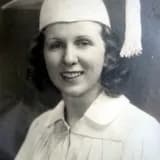
Kay McNulty began work as a human computer at the University of Pennsylvania's Moore School, calculating ballistics trajectories for the U.S. Army.
On July 1, 1942, Kay McNulty reported for duty at the Moore School of Engineering at the University of Pennsylvania, joining a workforce of women mathematicians recruited to serve as human 'computers' during World War II. Her task, along with dozens of other women, was to manually calculate complex ballistic and missile trajectory tables for the U.S. Army's Ballistics Research Laboratory, work critical to the accuracy of artillery in the war effort.
This role required intensive use of differential calculus and mechanical desk calculators, with each trajectory taking hours of painstaking hand computation. The women, many of them recent mathematics graduates like Kay who had studied at Chestnut Hill College, formed an essential but often overlooked labor force that kept pace with wartime demands for accurate firing tables.
This position placed Kay at the epicenter of a computing revolution. The sheer volume of calculations needed for the war effort exposed the limitations of human computation and created the urgent demand for a mechanized solution — setting the stage for the top-secret ENIAC project. Her firsthand mastery of trajectory mathematics made her one of the natural candidates selected to transition onto the new electronic machine when it was completed, fundamentally shaping the course of her career and the history of computing.