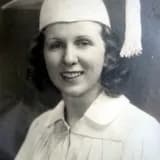
Kay McNulty was chosen as one of the first six programmers of ENIAC, the world's first general-purpose electronic digital computer.
In June 1945, Kay McNulty was selected as one of six women — alongside Jean Jennings Bartik, Frances Bilas Spence, Betty Snyder Holberton, Marlyn Wescoff Meltzer, and Ruth Lichterman Teitelbaum — to become the first programmers of the ENIAC (Electronic Numerical Integrator and Computer), widely recognized as the world's first general-purpose electronic digital computer.
Having already mastered manual trajectory calculations as human computers, these women were tasked with an unprecedented challenge: programming a machine with no operating system, no programming language, and no manuals. They worked directly from circuit diagrams and logical block diagrams, physically setting switches and plugging cables to route the machine's calculations — effectively inventing the discipline of programming from first principles.
Kay McNulty's selection for this role represents a genuine historical first: the inaugural cohort of programmers for a machine that would define the digital age. Despite the immense technical and intellectual demands of the work, the women received little public recognition at the time, their contributions overshadowed by the male engineers credited with ENIAC's hardware design. Decades later, historians would recognize this cohort as pioneers who essentially created early programming methodology, including techniques such as subroutines and program debugging, cementing their legacy as founding figures of computer science.