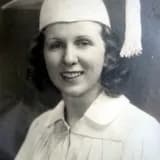
ENIAC's first full program run, developed with Kay McNulty's programming work, was publicly demonstrated at the Moore School, a world first for electronic computing.
On February 15, 1946, the ENIAC was formally unveiled to the public and press at the Moore School of Engineering in Philadelphia. This event marked the first public demonstration of a general-purpose electronic digital computer, a milestone that captured international attention and heralded the dawn of the computer age.
Kay McNulty, as one of the machine's original programmers, had spent months prior to the demonstration developing and refining the programs run on ENIAC, including complex ballistics trajectory calculations that showcased the machine's revolutionary speed — performing in seconds calculations that would take a human computer days. The successful demonstration proved that electronic computation was not only feasible but dramatically superior to mechanical and human calculation methods.
Although newspaper coverage and photographs from the event prominently featured the machine and its male creators, John Mauchly and J. Presper Eckert, the female programmers, including Kay, who had done the essential work of translating problems into working programs were largely uncredited in contemporary accounts. It was only decades later that historians recognized the demonstration's success was fundamentally dependent on the ingenuity and labor of Kay and her fellow programmers. This event is now regarded as a foundational moment in the history of computing, and Kay's role in it has since been celebrated as part of the broader recognition of women's contributions to STEM.