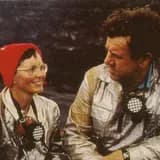
The same 3 June 1991 pyroclastic flow at Mount Unzen that killed Katia Krafft also killed her husband Maurice and dozens of others, becoming a landmark event in volcanic risk history.
The pyroclastic flow that struck Mount Unzen on 3 June 1991 claimed not only Katia Krafft's life but also that of her husband and scientific partner, Maurice Krafft, American volcanologist Harry Glicken, and dozens of journalists, firefighters, and local residents — 43 people in total. The disaster remains one of the most significant losses of scientific life in the history of volcanology.
The Kraffts had built their careers together over two decades, traveling to more than 300 volcanoes worldwide and documenting over 175 eruptions. Their joint death at Unzen was widely reported internationally and became a symbol of both the immense value and inherent danger of close-proximity volcanic research.
In the aftermath, the disaster prompted serious reflection within the volcanological and disaster-management communities about balancing scientific documentation with personal safety, and about how to communicate risk to journalists and civilians who might follow scientists into hazardous zones. Evacuation protocols in Japan and elsewhere were subsequently reviewed in light of the tragedy.
The Kraffts' combined body of work — thousands of photographs, hours of film, and numerous publications — continued to inform volcanic hazard education long after their deaths, and their story has been retold in documentaries, books, and museum exhibits, cementing their joint legacy as pioneers who died doing the work that had defined their lives.