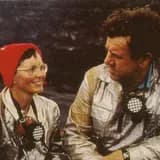
On 23 January 1973, Krafft was summoned to observe an eruption in southern Iceland, exemplifying her hands-on field methodology.
On 23 January 1973, Katia Krafft was called upon to observe a volcanic eruption in southern Iceland, part of the volcanic system associated with the Vestmannaeyjar archipelago that famously erupted at Eldfell on Heimaey around this period. This episode is emblematic of the Kraffts' rapid-response fieldwork approach, in which they would travel at short notice to active eruption sites around the world.
This early-career field campaign, occurring just a few years after Katia had begun her formal volcanological work, demonstrates the immediacy and physical risk that characterized her methodology. Rather than relying solely on remote sensing or secondhand reports, she and Maurice insisted on direct, close-up observation — often standing mere meters from flowing lava and venting gases.
This approach, though dangerous, would ultimately produce some of the most valuable visual and scientific documentation of volcanic activity in the twentieth century, contributing significantly to the public's understanding of eruptions and to the scientific community's ability to study volcanic behavior in real time.
The Iceland expedition was one of many such call-outs across her career, illustrating how she and Maurice positioned themselves as a rapid, embedded scientific response team, prefiguring later institutional volcanic hazard monitoring efforts.