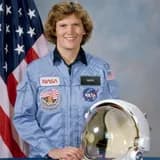
Space Shuttle Discovery's STS-31 mission landed at Edwards Air Force Base, completing the successful Hubble deployment mission.
On April 29, 1990, Space Shuttle Discovery landed safely at Edwards Air Force Base in California, concluding the historic STS-31 mission during which Kathryn Sullivan and her crewmates deployed the Hubble Space Telescope.
The five-day mission had accomplished its primary objective flawlessly, releasing Hubble into an orbit high enough to avoid atmospheric distortion and drag, ensuring decades of clear observations of the cosmos. Sullivan's precise, trained work with the shuttle's robotic arm and her readiness to perform a contingency spacewalk were key contributions to the mission's success.
The safe return of the crew marked the end of one of NASA's most celebrated scientific missions. Over the following decades, Hubble would produce a staggering body of astronomical data and imagery, becoming perhaps the most famous and scientifically productive space telescope in history, and its successful deployment is frequently cited alongside the Apollo Moon landings as one of NASA's crowning achievements.
For Sullivan personally, the successful completion of STS-31 solidified her standing as an accomplished mission specialist with deep scientific and technical expertise, setting the stage for her subsequent role as Payload Commander on STS-45 two years later.