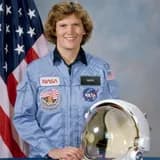
As Payload Commander, Sullivan launched aboard Atlantis on STS-45, the first Spacelab mission dedicated to studying planet Earth.
On March 24, 1992, Kathryn Sullivan launched on her third and final spaceflight aboard Space Shuttle Atlantis, serving as Payload Commander for mission STS-45, which lifted off from Kennedy Space Center.
STS-45 carried the ATLAS-1 (Atmospheric Laboratory for Applications and Science) payload and was designated the first Spacelab Mission to Planet Earth, an initiative within NASA's broader Mission to Planet Earth program focused on studying the interactions between the sun, Earth's atmosphere, and climate systems.
As Payload Commander, Sullivan was responsible for coordinating the extensive scientific research conducted during the mission, drawing directly on her academic background in geology and oceanography. The mission gathered critical atmospheric data related to ozone depletion, solar radiation, and atmospheric chemistry, contributing valuable information to the growing field of climate science at a time when environmental and atmospheric research was becoming an increasing priority for scientific agencies worldwide.
This mission underscored Sullivan's unique position within NASA as both an accomplished astronaut and a trained Earth scientist, someone who could bridge the operational demands of spaceflight with substantive scientific research objectives. Her leadership role as Payload Commander also reflected her growing seniority and expertise within the astronaut corps after eight years of spaceflight experience.