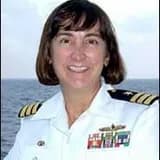
Spring 2000: McGrath leads USS Jarrett to the Persian Gulf for a six‑month mission interdicting Iraqi oil smugglers.
In the spring of 2000, approximately around March 2000, Capt. Kathleen McGrath led USS Jarrett (FFG‑33) from San Diego on a six‑month deployment to the Persian Gulf to interdict ships smuggling Iraqi oil. Contemporary accounts describe the deployment as beginning in spring 2000 but do not specify the exact departure day; the date is therefore approximate.[5][14][15]
Jarrett’s mission formed part of multinational efforts to enforce United Nations sanctions against Iraq following the Gulf War. McGrath commanded the frigate and its roughly 260‑member crew through the Strait of Hormuz into the Gulf, where the ship boarded and inspected commercial vessels suspected of violating sanctions.[5][15] Media coverage highlighted the novelty of a woman commanding a warship on such a high‑profile mission, emphasizing both the operational stakes and the symbolic significance.
During this deployment, McGrath balanced the tactical demands of maritime interdiction with the broader diplomatic sensitivities of operating in contested waters.[5] Time magazine later noted that she undertook the mission while her husband, former Navy officer Gregory Brandon, remained in San Diego caring for their two children adopted from Russia, underscoring the dual pressures faced by women balancing command and family responsibilities.[15]
The spring 2000 Gulf deployment demonstrated that McGrath’s historic command was not merely ceremonial: she led Jarrett in a real‑world enforcement operation that tested her leadership under international scrutiny. For women’s military history, this approximate date marks the moment when a woman‑commanded U.S. warship took on a central role in a major sanctions‑enforcement campaign, further normalizing women’s presence in combat‑related naval operations.[5][15]