← All women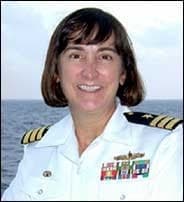
American · Aviation
Kathleen A. McGrath
June 4, 1952 – September 26, 2002
Early Life and Background
Kathleen Anne McGrath was born on 4 June 1952 in Columbus, Ohio.[1][2] She grew up in a military family; her father was a pilot in the U.S. Air Force, and she was the eldest of six children.[2][4][8] As a result, McGrath spent her childhood moving among Air Force bases around the world, experiencing first-hand the itinerant and disciplined life of military service members and their families.[4][8] This upbringing immersed her in military culture from an early age and familiarized her with international travel, diverse communities, and the demands of service.
Accounts from family and colleagues describe McGrath as serious, capable, and deeply influenced by her father’s example.[2][4] Growing up during the Cold War, she witnessed the centrality of aviation and strategic power to U.S. defense, yet lived at a time when women’s roles in the armed forces were sharply circumscribed. These early experiences would later inform her decision to pursue a career in the military and prepared her to navigate institutions that were only beginning to open leadership opportunities to women.
Education and Early Civilian Career
After finishing high school, McGrath enrolled at California State University, Sacramento, where she studied environmental science.[1][2][8] She graduated in 1975 with a Bachelor of Science in Environmental Science.[1][2][8] University records and military biographies note that she was a strong student, combining scientific training with an emerging interest in public service.
Following graduation, McGrath worked for the U.S. Forest Service.[2][8] This early civilian career placed her in a federal agency concerned with land management, conservation, and environmental stewardship. Her work there demonstrated her capacity for technical and field-based roles and offered her a view of civil service outside the armed forces. Nonetheless, the pull of her family’s military background remained strong, and by 1980 she decided to pursue her own uniformed career.[2][8]
Entry into the U.S. Navy
In 1980, McGrath entered the U.S. military and was commissioned as an officer in the U.S. Navy after completing Officer Candidate School.[2][6][8] Available public sources agree on the year of her accession but do not provide a precise month and day.[2][6] Her decision to join the Navy, rather than the Air Force in which her father had served, reflected both continuity with her family’s tradition of military service and an independent choice of branch.
The timing of her entry was significant. In 1980, women in the Navy were still barred from serving on combatant ships by law and policy, and their opportunities for leadership at sea were limited.[6] McGrath’s choice to enter the service in that context meant accepting an institution in which her career trajectory would be shaped by external political debates about women in combat. Over the next two decades, she would become one of the officers who both benefited from and gave practical proof of the viability of policy changes expanding women’s roles.
Career Development and Sea Duty
Following her commissioning, McGrath completed initial officer training and began a succession of sea and shore assignments. Military biographies indicate that from 1983 onward she served on various ships, gaining experience in operations, navigation, and leadership in the surface warfare community.[2][8] Her early tours were essential in building the seamanship and technical expertise needed for future command.
While serving in the Navy, McGrath continued her education. In 1987 she earned a Master of Arts in Educational Management from Stanford University.[2][8] She attended Stanford as part of a Navy-sponsored program that allowed promising officers to pursue graduate study. Her time there refined her understanding of organizational leadership, training, and human resource management—skills directly relevant to commanding complex crews and managing shipboard operations.
Professionally, she joined the surface warfare community, the segment of the Navy responsible for the operation of non-aviation surface combatants such as destroyers and frigates. Over subsequent years she served on multiple vessels and in staff assignments, including roles associated with Destroyer Squadron deployments and operations in the Western Pacific and Arabian Gulf.[2][6][8] These experiences familiarized her with blue-water operations, multinational exercises, and the demands of extended deployments.
Participation in Operations in the Gulf Region
In the early 1990s, McGrath’s career intersected with major geopolitical events. Military biographical records note that in the period around 1990 she participated in operations designed to protect Saudi Arabia after Iraq’s invasion of Kuwait and served as Chief Staff Officer for Destroyer Squadron Seven, deployed to the Western Pacific and Arabian Gulf as part of the Constellation Battle Group.[2][8] In these roles, she contributed to planning and executing large-scale naval operations associated with the Gulf War and its aftermath.
Her staff responsibilities required coordinating among multiple ships, managing logistics, and ensuring that deployed forces could meet mission requirements across vast maritime regions. Such work demanded both operational understanding and the ability to function effectively within joint and multinational chains of command, further preparing her for eventual command at sea.
Command of USS Recovery (ARS 43)
A key milestone in McGrath’s progression was her first ship command. In 1993, she assumed command of the USS Recovery (ARS 43), a rescue and salvage ship.[2][6] She commanded Recovery in 1993 and 1994, overseeing operations that included towing disabled vessels, conducting salvage tasks, and supporting fleet readiness. Although rescue and salvage ships are not front-line combatants, their work is essential to sustaining naval capabilities.
Command of Recovery provided McGrath with her first opportunity to exercise full responsibility for a ship and its crew. She managed maintenance, training, and daily operations while demonstrating the leadership qualities expected of commanding officers. In the context of the early 1990s, having a woman in such a seagoing command role was still unusual, and her performance helped demonstrate that women officers could successfully lead ships even before combatant vessels were opened to them.[6]
Policy Changes Opening Combatant Ships to Women
McGrath’s career trajectory was shaped by broader institutional change. In the mid‑1990s, following legislative and policy reforms, the U.S. Navy opened combatant ships to women, eliminating formal restrictions that had long barred women from serving—and commanding—front-line warships.[6] These changes reflected evolving societal attitudes toward women in the military and were influenced by wider debates about equality, readiness, and the nature of modern combat.
According to the Navy’s own historical summaries, McGrath was later identified as one of five women selected to be the first female commanding officers of combatant ships in the U.S. Navy, alongside Michelle Howard, Maureen Farren, Ann O’Connor, and Grace Mehl.[6] This group symbolized the practical implementation of the new policies, demonstrating that high-responsibility combatant commands would be entrusted to women as well as men.
Command of USS Jarrett (FFG‑33): First Woman to Command a Warship
On 18 December 1998, McGrath assumed command of the USS Jarrett (FFG‑33), a guided-missile frigate.[1][6][12] By taking command of this front-line surface combatant, she became the first woman to command a United States Navy warship and the first woman to command a frigate in Navy history.[1][6][8] Jarrett was a 453‑foot frigate equipped for air defense, anti‑submarine warfare, and surface engagements, with a crew of more than 250 sailors.[5][15]
McGrath’s selection for this command reflected both her extensive operational experience and the Navy’s growing confidence in women officers following policy reforms. She joined a small cohort of women entrusted with combatant ship commands, but as the first to take a warship’s bridge in this capacity, she drew particular public attention. The appointment challenged lingering assumptions that such roles were unsuitable for women.
As commanding officer, McGrath bore full responsibility for Jarrett’s readiness, training, and operations. She oversaw the ship’s participation in exercises and deployments, ensured the crew’s proficiency in weapons systems and shiphandling, and represented her vessel within larger task groups. Her performance in this role would become the primary evidence cited by supporters of women’s full integration in surface warfare leadership.
Pivotal Persian Gulf Deployment
In the spring of 2000, McGrath led Jarrett from its homeport of San Diego on a six‑month deployment to the Persian Gulf.[5][14][15] Sources describe the deployment as starting in spring 2000, though the precise departure date is not publicly documented. The mission formed part of multinational efforts to enforce United Nations sanctions against Iraq by interdicting ships suspected of smuggling Iraqi oil.[5][15]
Jarrett transited the Strait of Hormuz and operated in the Gulf, boarding and inspecting tankers and other commercial vessels to ensure compliance with sanctions. McGrath commanded the frigate and its approximately 262‑member crew throughout the deployment.[15] Media coverage highlighted that a woman was directing these enforcement operations from the bridge of a U.S. warship, symbolizing the visible integration of women into combat‑related seagoing roles.
Time magazine later noted that while McGrath was deployed, her husband, former Navy officer Gregory Brandon, remained in San Diego to care for their two children, who had been adopted from Russia.[15] This detail underscored the dual responsibilities faced by women in high‑intensity military roles: managing operational demands while balancing family life.
End of Jarrett Command
McGrath’s command of Jarrett lasted until 4 September 2000, when her tour as commanding officer concluded.[12][8] She had taken command in December 1998, and by the time she relinquished the helm, she had successfully led the frigate through routine operations and the high-profile Persian Gulf deployment.
Naval recollections emphasize that her tenure was marked by professionalism, strong seamanship, and effective leadership.[12] The completion of her command tour was important in demonstrating that women could not only be appointed to such positions but could carry them out successfully over an extended period. In the eyes of many observers, Jarrett’s deployment and safe return under McGrath’s leadership turned a pioneering assignment into a fully realized command experience.
Promotion to Captain and Final Service
In May 2002, McGrath was promoted to the rank of captain in the U.S. Navy.[2][8] The promotion recognized her long record of service, leadership, and her role in breaking new ground for women in surface warfare. However, her health was deteriorating. Military biographical sources indicate that she retired from active duty in August 2002 due to illness.[2][8]
By this time, McGrath had completed more than two decades of service, including multiple deployments, ship commands, staff roles, and educational achievements. Her promotion to captain shortly before retirement underscored the Navy’s regard for her contributions, even as illness curtailed further advancement.
Awards and Honors
Throughout her career, McGrath received numerous awards recognizing both her operational performance and her pioneering role. Navy and biographical sources report that she was awarded the Legion of Merit and the Meritorious Service Medal multiple times.[2][8] These decorations are conferred for exceptionally meritorious conduct in the performance of outstanding services and achievements, indicating the high esteem in which her work was held.
She was also honored by her alma mater, California State University, Sacramento. The university’s alumni association established or conferred an award bearing her name, acknowledging her as a distinguished graduate whose career exemplified leadership and service.[2] Such institutional recognition helped maintain her legacy in civilian as well as military circles.
In addition to formal decorations, McGrath received public honors. Obituaries in major newspapers and periodicals framed her as a trailblazer whose career changed perceptions of women’s capabilities in naval command.[5][14][15] These tributes, though not medals, have contributed significantly to the historical record of her impact.
Personal Life
McGrath’s personal life intersected closely with her military career. She married Gregory Brandon, himself a former Navy officer.[15] Together, they formed a family that remained connected to the military community and understood the demands of service.
The couple adopted two children from Russia.[15] During McGrath’s deployment to the Persian Gulf in 2000, Brandon stayed in San Diego to care for the children, highlighting the family’s shared commitment to balancing military responsibilities with parenting. This arrangement was noted by Time magazine, which portrayed McGrath as a commander and mother navigating the dual pressures of leadership and family life.[15]
McGrath also maintained ties to the broader military community, including fellow officers from the cohort of women who first commanded combatant ships. Although detailed accounts of her personal interests and hobbies are limited in public sources, colleagues remember her as dedicated, modest, and focused on her crew’s welfare.[4][12]
Later Life, Illness, and Death
In the early 2000s, McGrath’s health began to decline. She was diagnosed with lung cancer, a disease that ultimately compelled her retirement in August 2002.[2][5][8] On 26 September 2002, she died of cancer at the National Naval Medical Center in Bethesda, Maryland, at age 50.[1][5][14][15] Her death was widely reported, with obituaries appearing in outlets such as the Los Angeles Times, the Washington Post, and Time magazine.[5][14][15]
These accounts emphasized the poignancy of her passing at a relatively young age and the significance of her accomplishments. The Los Angeles Times described her as the first woman to command a U.S. Navy warship and noted her leadership of Jarrett on the Gulf deployment.[5] The Washington Post likewise highlighted her groundbreaking command and the visibility it brought to debates about women in combat roles.[14]
McGrath is buried at Arlington National Cemetery in Arlington, Virginia.[2][3] Burial there reflects formal recognition of her service and places her among many of the United States’ most honored military figures.
Legacy and Historical Impact
McGrath’s legacy lies principally in her role as a pioneer for women in naval command. By becoming the first woman to command a U.S. Navy warship and a frigate, she broke a barrier that had both symbolic and practical importance.[1][6][8] Her success demonstrated that women could lead front-line combatant ships effectively, undermining arguments that had long been used to justify exclusion from such roles.
Her command of Jarrett, particularly the Persian Gulf deployment of 2000, provided concrete evidence of women’s capacity to manage complex operations under international scrutiny. Media coverage turned her into a public figure representing women’s broader integration into the armed forces.[5][14][15] Time magazine’s "Milestones" obituary on 7 October 2002 further solidified her status in the historical record, explicitly naming her as the first woman ever to command a U.S. Navy warship and summarizing her career for a general audience.[15]
Within the Navy, McGrath is remembered alongside contemporaries such as Michelle Howard and other members of the initial cohort of women chosen to command combatant ships.[6] Their combined careers helped normalize women’s presence in high-responsibility seagoing roles and contributed to a steady increase in the number of women surface warfare officers reaching command and flag rank.
From a broader women’s-history perspective, McGrath’s life illustrates the interplay between individual determination and institutional change. She entered the Navy at a time when structural barriers limited women’s paths, then remained in service long enough to benefit from and embody the reforms that followed. Her achievements underscore how policy changes alone are insufficient without individuals willing to step into newly opened roles and perform convincingly.
Today, discussions of women’s integration into combat roles often cite McGrath as an early example of successful female leadership on a warship’s bridge.[1][6][14] Her story continues to inspire women considering careers in military service and serves as a reminder of the progress achieved—and the effort required—over the last several decades.
Historical Assessment
In assessing McGrath’s historical significance, several themes stand out:
- Barrier-breaking command: She was the first woman to command a U.S. Navy warship and the first to command a frigate, accomplishments documented in Navy histories and major media.[1][6][15]
- Operational credibility: Her command of Jarrett during a sanctions-enforcement mission in the Persian Gulf demonstrated that women’s presence in combatant leadership roles was not merely symbolic.[5][15]
- Role in policy implementation: As one of the initial cohort of women selected for combatant ship command after policy changes, she helped translate legislative reforms into lived institutional practice.[6]
- Public representation: Obituaries and profiles framed her as an emblem of women’s advancement in the military, influencing public perceptions of women’s capabilities in high-risk roles.[5][14][15]
McGrath’s life and career thus occupy an important place in the ongoing story of women in the U.S. armed forces. Her achievements were made possible by broader social and policy shifts, yet they also helped confirm and legitimize those changes. For editorial almanacs of women’s history, Kathleen Anne McGrath stands as a key figure in the late 20th and early 21st century evolution of women’s military leadership.
Dated achievements
8 indexed.
- Jun041952Aviation
Birth of Kathleen Anne McGrath
Birth of Kathleen Anne McGrath in Columbus, Ohio, later first woman to command a U.S. Navy warship.
View details Kathleen A. McGrath - Wikipedia - Jan011980Aviation
McGrath joins the U.S. Navy
Kathleen McGrath enters the U.S. Navy in 1980, beginning the 22-year career that leads to her historic warship command.