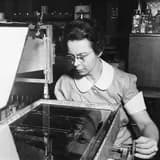
U.S. patent 2,220,861, “Reduction of Surface Reflection,” is issued to Katharine Burr Blodgett, securing a key method for anti-reflective glass.
On November 5, 1940, Katharine Burr Blodgett received U.S. patent 2,220,861 for her invention “Reduction of Surface Reflection.” In this patent, she detailed a method for applying carefully controlled thin films to glass surfaces so that the reflected light from the coating cancels the reflection from the underlying glass.
This patent represents the core intellectual property behind her celebrated nonreflecting or “invisible” glass. By adjusting the thickness of the deposited film to a precise fraction of the wavelength of visible light, Blodgett engineered destructive interference of reflected light, dramatically reducing glare. Her approach transformed a subtle phenomenon in physical chemistry and optics into a manufacturable process with immediate commercial and military value.
The issuance of this patent is historically significant as a pioneering advance in anti‑reflective coating technology. It enabled clearer camera lenses, museum display glass, periscopes, and eyeglasses, and it laid conceptual groundwork for modern optical coatings used in fiber optics, solar panels, and high‑precision instruments. In an era when women were rarely recognized as inventors in industrial science, Blodgett’s success also marked an important breakthrough in the visibility of women chemists and physicists within the patent system and corporate innovation.