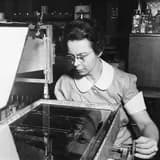
On June 13, 1951, Schenectady’s mayor proclaims “Katharine Blodgett Day,” honoring her scientific achievements and service at GE.
On June 13, 1951, the city of Schenectady, New York, honored its native daughter by proclaiming “Katharine Blodgett Day.” The mayor’s declaration recognized Blodgett’s outstanding achievements in physics and chemistry and her long service at the General Electric Research Laboratory.
By 1951, Blodgett was internationally known for her invention of nonreflecting “invisible” glass and for her pioneering work on Langmuir–Blodgett films, as well as for being the first woman to earn a PhD in physics from the University of Cambridge. The civic celebration symbolized the pride of a community whose industrial identity was deeply intertwined with GE and whose scientific reputation was elevated by her research.
This proclamation is historically significant as a public, local acknowledgment of a woman scientist during an era when such recognition was rare. It reflects the growing awareness of women’s contributions to science and technology in mid‑20th‑century America and highlights the role of municipalities in celebrating research alongside more traditional civic accomplishments. For women’s‑history scholars, “Katharine Blodgett Day” offers a concrete example of how a woman industrial scientist could become a recognized figure in her hometown, prefiguring later efforts to memorialize women in STEM through named days, street signs, and commemorative programs.