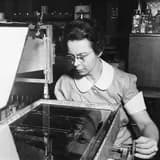
Katharine Burr Blodgett dies in Schenectady, New York, on October 12, 1979, after a pioneering career in physics, chemistry, and industrial research.
Katharine Burr Blodgett died on October 12, 1979, in her hometown of Schenectady, New York, at the age of 81. Her death marked the close of a life spent almost entirely within the orbit of General Electric’s Research Laboratory, where she had built a four‑decade career as a physicist and chemist.
By the time of her passing, Blodgett was widely recognized for her invention of nonreflecting “invisible” glass, her contributions to Langmuir–Blodgett films, and her status as the first woman to earn a PhD in physics from the University of Cambridge. She had received multiple honorary degrees, major awards such as the American Association of University Women Achievement Award and the American Chemical Society’s Garvan Medal, and local honors including a day named after her in Schenectady.
The date of her death is historically significant as a moment for assessing the legacy of early women industrial scientists. Blodgett’s career unfolded during a period when women faced entrenched barriers in physics and corporate research, yet she attained international prominence and helped shape modern optical and surface‑science technologies. Her life story, culminating on this October day in 1979, continues to serve as a reference point in discussions of gender, invention, and the long trajectory of women’s participation in scientific laboratories.