← All women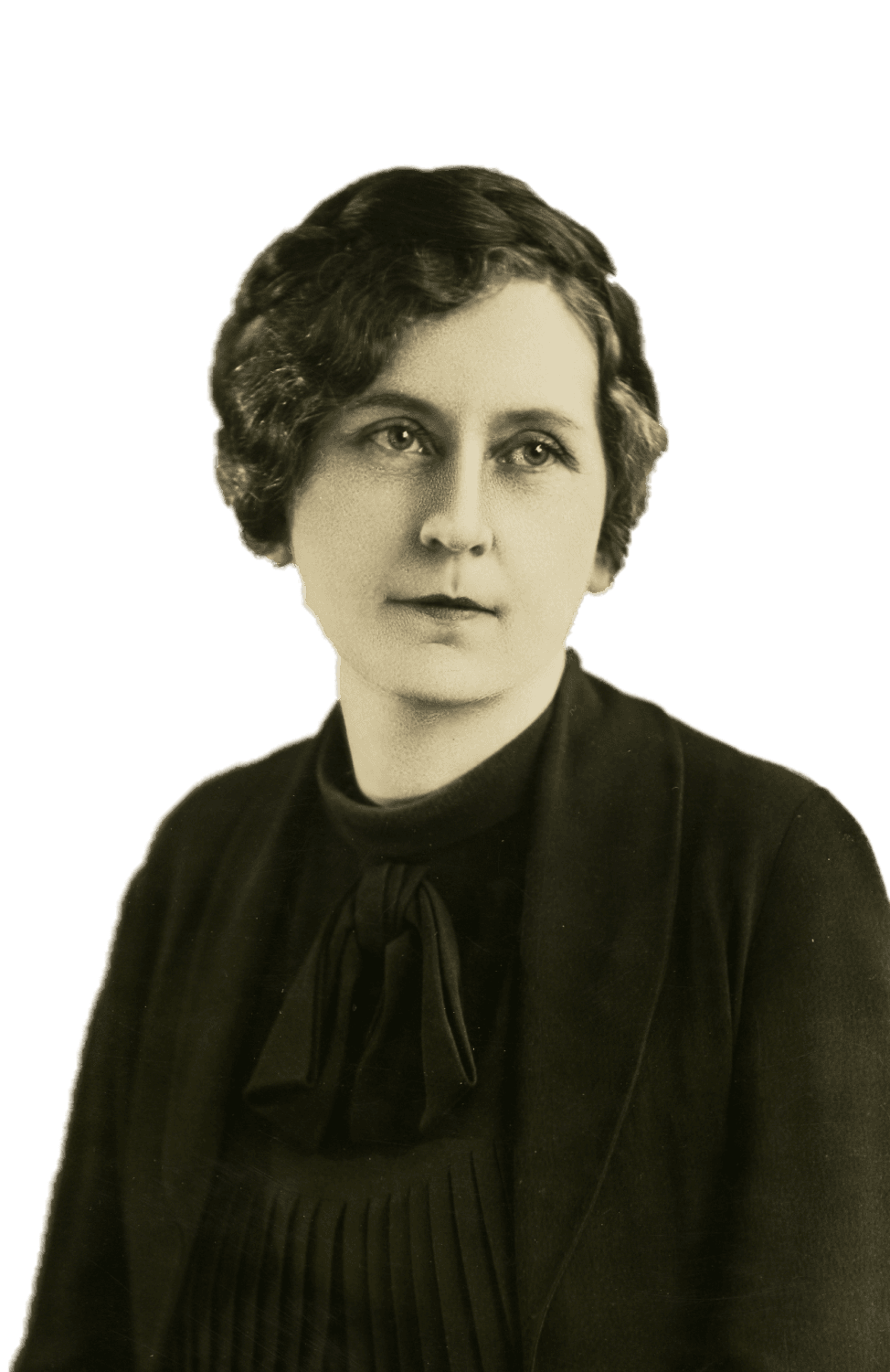
American · Activism
Kate Galt Zaneis
February 17, 1887 – September 9, 1973
Early Life and Background
Kate Galt Zaneis was born on February 17, 1887, in Springplace, Georgia, the fourth child of James E. and Miriam Galt.[1][2] Her family later moved to Ardmore, Oklahoma, where she completed her secondary education and graduated from Ardmore High School in 1907.[1] Growing up in the post‑Reconstruction South and then in the rapidly developing Oklahoma Territory and state, Zaneis was exposed to contrasting regional cultures and to the transformation of public schooling in the early twentieth century.
Sources describe her as a "tall, statuesque blonde" whose physical presence and style drew attention in an era when few women occupied prominent public offices.[1][3] While detailed records of her childhood are limited, her later career indicates that she absorbed strong values around public service, education, and civic responsibility, likely influenced by both her family environment and the social expectations placed on women schoolteachers in the early 1900s.
After high school, Zaneis trained as a teacher and began working in Oklahoma schools.[1] She pursued further study over the following decades, ultimately earning a master’s degree from Oklahoma A&M College (now Oklahoma State University).[2] This commitment to advanced education was unusual for women educators of her generation and helped prepare her for administrative roles that would carry statewide significance.
Career Beginnings and Development
Zaneis’s early career was rooted in classroom teaching and local educational administration. By the 1910s and 1920s, she had become deeply involved in the management and improvement of rural schools in southern Oklahoma.[1][4] In 1913, she married H. P. Zaneis, and the couple moved to Wirt, Oklahoma, a boomtown near the Healdton oil field.[1] The marriage and move connected her to communities shaped by the oil industry, where population fluctuation and uneven local wealth posed particular challenges for school systems.
Her most significant early administrative appointment came in 1920, when she became the fifth superintendent of schools for Carter County, Oklahoma.[4] As county superintendent, she oversaw a network of rural and urban schools, supervised teachers, and implemented state education policy at the local level. The role placed her among the relatively small number of women holding county‑wide educational authority in Oklahoma at that time.
During her tenure in Carter County, Zaneis confronted structural issues typical of rural education in the early twentieth century: scattered and under‑resourced districts, variable teacher training, and limited facilities.[4] She advocated for better record‑keeping, standards, and, where possible, consolidation of small schools. This work helped establish her reputation as a reform‑minded administrator who grounded policy in data and local observation.
Major Works and Accomplishments
"Journal of Carter County Schools"
One of Zaneis’s most notable early contributions was the "Journal of Carter County Schools", produced in 1923 while she was county superintendent.[4] The journal, a substantial 400‑page volume, offered an "extremely comprehensive" study of every school in the county and organizations connected with them.[4] It compiled facts, photographs of county and city schools, and even official plats of each district, making it an unusually detailed snapshot of local educational infrastructure.
At a time when many rural counties lacked systematic records, Zaneis’s journal served both practical and symbolic functions. Practically, it provided county officials, teachers, and citizens with a factual base for discussions about consolidation, funding, and standards. Symbolically, it demonstrated that a woman administrator could produce rigorous, data‑driven policy tools, challenging stereotypes that women’s educational work was limited to the classroom.
The journal is still referenced in local historical materials as an important source on Carter County’s school history, attesting to its lasting value.[4] In the broader context of women’s history, it exemplifies how women educators engaged in early forms of educational research and planning, laying foundations for later professional fields such as school administration and educational policy analysis.
Election as President of Southeastern Oklahoma State Teachers College
Zaneis’s most historically significant accomplishment came in May 1935, when she was chosen to lead a state college. On May 10, 1935, the Oklahoma State Board of Education elected her president of Southeastern Oklahoma State Teachers College (STC, now Southeastern Oklahoma State University) in Durant.[1] This election made her the first woman to serve as president of a public four‑year state college or university in the United States.[1][2]
According to the Encyclopedia of Oklahoma History and Culture, she served as the ninth president of STC from May 1935 to July 1937.[1] The campus newspaper and later accounts emphasize that in becoming president of a four‑year public college, Zaneis broke a national barrier in higher education leadership, years before it became more common for women to hold such positions.[1][2]
Her appointment occurred during the Great Depression, when economic hardship deeply affected southeastern Oklahoma. Enrollment and funding were under pressure, and many students came from families struggling with poverty.[1][3] Zaneis brought to the presidency her experience as a county superintendent and her commitment to improving teacher training and rural education. She sought to raise academic standards, support students, and represent the college effectively to state authorities.
Sources note that her selection was widely viewed as politically significant. A later thesis on her life characterizes the appointment as "purely political" but acknowledges that it was a major step in her career, since no other woman had ever served as president of a four‑year college.[3] Regardless of political dynamics, her tenure placed a woman visibly and authoritatively at the top of a state institution, forcing colleagues, legislators, and the public to reconsider assumptions about women’s capacity for executive leadership.
Tenure as College President
Zaneis formally assumed the presidency in May 1935 and governed STC through mid‑1937.[1] During this period, she faced the dual challenge of leading a teacher‑training institution during economic crisis and doing so under heightened scrutiny as a woman in a role traditionally reserved for men.
Contemporary descriptions portray her as stylish yet commanding. She was frequently seen wearing fashionable hats and carrying herself with an erect posture that "seemed to command attention," according to recollections cited in the thesis about her life.[3] Her distinctive appearance and demeanor became part of the public image of the college presidency, prompting admiration among some and unease among others unfamiliar with women in such positions.
While detailed administrative records from her presidency are limited in readily accessible sources, the Oklahoma Historical Society notes that she led the institution until July 1937.[1] Her departure appears to have been connected to political and institutional tensions, including resistance to her leadership style and decisions. Nonetheless, her two‑year tenure remains significant as an early test case of women’s leadership at the helm of a state college.
Later Career: State‑Level Educational Service
After leaving the presidency of Southeastern Oklahoma State Teachers College, Zaneis continued her involvement in public education and state administration. Later in her career she served as director of education for the Oklahoma Department of Public Safety.[1][2] In that role, she contributed to the development and oversight of educational programs related to public safety, an area that intersected with driver education, law enforcement training, and public outreach.
She also worked extensively on the school lunch program in Oklahoma, first through the Department of Public Welfare and later under the Department of Education.[1][2] School lunch initiatives were critical in the mid‑twentieth century, particularly for children in low‑income, rural areas, where nutrition and access to food were persistent concerns. Zaneis’s involvement linked her earlier interest in rural schooling with broader issues of student welfare and health.
These roles demonstrate that her influence extended beyond a single college campus. She helped shape state policy and practice in domains that affected everyday life for thousands of children and families. Although these later positions receive less attention than her groundbreaking college presidency, they illustrate a sustained career in public service and educational administration.
Awards, Honors, and Recognition
Published sources do not list major national awards or honors for Zaneis, but her legacy has been recognized in several ways. The Encyclopedia of Oklahoma History and Culture highlights her as "the first female to head a state college or university in the nation," underscoring the historical importance of her appointment to the presidency of Southeastern Oklahoma State Teachers College.[1]
Campus and regional publications, including a feature in The Southeastern, commemorate her achievement as the first woman to serve as president of a public four‑year college in the United States and one of only a handful of women to serve as college presidents in Oklahoma’s history.[2] Her story is also preserved in a graduate thesis that examines her life, character, and contributions.[3]
These institutional and scholarly recognitions function as collective honors, situating Zaneis within the broader narrative of women’s progress in educational leadership. The absence of formal awards reflects the historical context: many women who broke barriers in the early and mid‑twentieth century did so without the kinds of public accolades that later generations might receive.
Personal Life
In 1913, Kate Galt married H. P. Zaneis, after which she commonly appeared in records as Kate Galt Zaneis.[1] The couple moved to Wirt, Oklahoma, where the surrounding oil economy impacted local communities and the schools in which she worked.[1] Available sources provide limited detail about the dynamics of their marriage or whether they had children; the principal biographical accounts focus on her public career rather than her domestic life.
A later thesis based on family interviews notes the importance of her close relationship with "Miss Pearl," a companion whose declining health and death had a profound emotional impact on Zaneis in her final years.[3] Her brother recalled that the two women were "inseparable" and that this had an effect on Kate’s passing, suggesting that personal relationships remained central to her life even as she engaged in demanding public roles.[3]
Descriptions of her personality emphasize her poise, self‑confidence, and distinctive fashion sense, including her habit of wearing floppy‑style hats that covered her braided blond hair and framed her face.[3] These details reflect a woman who carefully curated her public image at a time when women leaders were scrutinized for both their appearance and their actions.
Legacy and Historical Impact
Kate Galt Zaneis’s principal legacy lies in her role as the first woman to head a state college or university in the United States.[1][2] Her election and service as president of Southeastern Oklahoma State Teachers College from May 1935 to July 1937 predated the broader wave of women’s advancement into top academic leadership positions by several decades.
Her presidency demonstrated that a woman could manage the complex responsibilities of a public college, including oversight of faculty, students, budgets, and political relationships. While her tenure was relatively short and contested, it opened symbolic and practical space for subsequent women in higher education administration. Later historians and journalists point to her story when tracing the slow expansion of women’s representation among college and university presidents.[1][2]
In Oklahoma, Zaneis also stands as an important figure in the evolution of rural and county‑level education. Her "Journal of Carter County Schools" remains a valuable document for local historians and illustrates an early, systematic approach to educational data collection.[4] Combined with her state‑level work in public safety education and school lunch programs, these contributions show how one educator’s career could span classroom teaching, county administration, college leadership, and state policy.
From a women’s history perspective, Zaneis represents a generation of women who expanded the boundaries of acceptable professional roles through persistence in education and public service, often without widespread recognition. Her story helps illuminate the barriers—economic, cultural, and institutional—that women faced when seeking authority and responsibility in public institutions during the early to mid‑twentieth century.
Later Life and Death
In her later years, Zaneis continued working in state government roles related to education, including as director of education for the Oklahoma Department of Public Safety and in the administration of school lunch programs through the Department of Public Welfare and the Department of Education.[1][2] These positions extended her influence over programs that affected the daily lives and safety of Oklahoma’s children.
As she aged, her health declined. A thesis summarizing family accounts reports that she was hospitalized at Ardmore Memorial Hospital and "never returned home," dying slowly on a Sunday, September 9, 1973.[3] She was 86 years old at the time of her death, closing a life that had spanned from the late nineteenth century into the modern era of American education.
Following her death, Zaneis was buried at Rosehill Cemetery in Ardmore, Oklahoma, the community with which she had long been associated.[1] Her passing prompted reflections among family members and local educators on the impact of her career. While she did not achieve widespread national fame, her story has been preserved in state and institutional histories, ensuring that her groundbreaking role in higher education leadership is not forgotten.
Today, scholars and students of women’s history and educational history continue to revisit her life through encyclopedia entries, campus publications, and academic theses.[1][2][3][4] These sources collectively present Zaneis as a pioneering figure whose individual achievements help chart the broader trajectory of women’s participation and leadership in American public education.
Dated achievements
6 indexed.
- Feb171887Activism
Birth of Kate Galt Zaneis in Springplace, Georgia
Birth of educator Kate Galt (later Zaneis) in Springplace, Georgia, who would become the first woman to head a public four‑year state college in the U.S.[1]
View details Zaneis, Kate Galt – Encyclopedia of Oklahoma History and Culture - Jan011920