← All women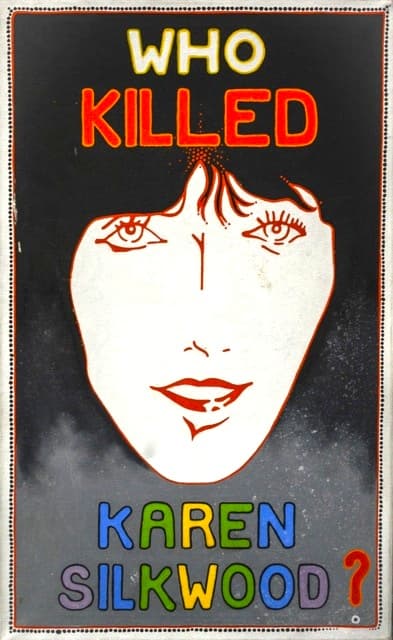
American · Activism · Science
Karen Silkwood
February 19, 1946 – November 13, 1974
Early Life and Background
Karen Gay Silkwood was born on February 19, 1946, in Longview, Texas, USA.[1][2][10][16] She was the eldest child of William Silkwood, a paint contractor, and grew up in the oil-and-gas corridor of East Texas, a region shaped by working-class communities and industrial labor.[10][16] Sources describe her childhood as typical for the area and era, with no early indication that she would later become a nationally known figure in nuclear and labor history.[16]
After completing secondary school, Silkwood attended Lamar College in Beaumont, Texas.[10] Lamar, situated in a petrochemical hub, exposed her to the expanding industrial economy of the Gulf Coast, though there is no evidence she completed a degree. Her partial college experience nonetheless broadened her horizons beyond small-town Texas and provided a foundation for later work in laboratory environments.
Silkwood’s formative years coincided with the early Cold War and the growing prominence of nuclear technology, though her own path into the nuclear industry would emerge only later, driven by economic necessity and family responsibilities. Her background as a working-class woman from the U.S. South would inform her perspective on workplace safety, corporate power, and the vulnerability of ordinary workers to technological risks.
Personal Life and Family
In 1966, Silkwood married Bill Meadows, a union carpenter.[10] The couple had three children together.[10] Their marriage unfolded within a social context in which women were expected to balance domestic responsibilities with increasingly common participation in paid work, often in low- or medium-wage positions.
The marriage eventually broke down, and Silkwood and Meadows divorced in 1972.[10] Following the divorce, Silkwood faced the economic pressures of supporting herself and her children. These circumstances were important in pushing her toward higher-paying, but more dangerous, industrial employment. Many accounts emphasize that her role as a mother shaped her concern about workplace hazards, as exposure to toxic substances threatened not only workers themselves but also their families.
After the divorce, Silkwood relocated to Oklahoma, seeking stable employment. She maintained ties to her children and extended family, and later commemorative sources note that she was laid to rest in Danville Cemetery in Kilgore, Texas, reflecting enduring family connections to East Texas.[11]
Entry into Industrial and Nuclear Work
Following her move to Oklahoma City, Silkwood sought work that would provide a living wage. Around 1972, she secured employment as a laboratory or chemical technician at the Kerr-McGee Corporation’s Cimarron River nuclear fuel fabrication plant, sometimes described as being near Crescent or Cimarron, northwest of Oklahoma City.[1][2][7][8][10][14][19] The facility produced plutonium fuel pellets for nuclear reactor fuel rods.[1][8][14]
As a technician, Silkwood’s duties involved handling plutonium compounds and participating in processes that shaped and tested fuel pellets. These tasks required adherence to strict safety protocols, at least in principle, to prevent contamination and uncontrolled exposures. The plant operated under the regulatory framework of the U.S. Atomic Energy Commission (AEC), though later investigations and testimony suggested that safety standards were unevenly enforced.
Like many industrial workers entering the nuclear industry in the early 1970s, Silkwood initially found the job attractive due to relatively high wages, benefits, and the prestige associated with cutting-edge technology.[16] Over time, however, she grew increasingly disillusioned, as she and coworkers experienced contamination incidents and observed what they believed were shortcuts and irregularities in quality control and radiation monitoring.[10][16]
Union Involvement and Emergence as an Activist
Soon after joining Kerr-McGee, Silkwood became active in the Oil, Chemical and Atomic Workers International Union (OCAW), specifically Local 5-283.[1][6][9][15] The OCAW represented workers in chemical, petrochemical, and nuclear industries and had a long history of campaigning for occupational health and safety.
Silkwood’s union activism focused particularly on safety issues in the plutonium plant.[6][9] She listened to coworkers’ concerns, observed recurring problems with contamination, and began participating in union efforts to challenge management over working conditions. Her commitment and credibility led to her election as a member of the union’s negotiating team at the plant.[9] According to multiple accounts, she was the first woman to hold such a position at Kerr-McGee’s facility, breaking a gender barrier in a male-dominated industrial environment.[8][9][11]
Serving on the negotiating team placed Silkwood at the heart of discussions with management over wages, hours, and safety procedures. It also gave her access to information and documentation that would later be central to her whistleblowing activities. Her union role underscored the increasing presence of women in industrial jobs and in union leadership, aligning with broader trends in second-wave feminism and labor organizing.
Investigation of Safety Violations and Plutonium Contamination
By 1974, Silkwood had become deeply concerned about safety practices at the Cimarron River plant. Workers reported inadequate monitoring, faulty equipment, and inconsistent enforcement of safety rules.[10][16] Allegations also surfaced that production records and quality-control data might be falsified or tampered with, potentially allowing defective fuel rods to leave the plant.[10][16]
In 1974, Silkwood herself was found to be contaminated with plutonium, an event documented in multiple sources but not tied to a specific day.[1][8][10] Contamination was detected on several occasions, including one in which she triggered radiation monitors when leaving the plant, and later when her apartment was surveyed by health physicists.[8][10] Plutonium traces were discovered in her bathroom, kitchen, and personal belongings, as well as in her body, raising fears about both workplace exposures and potential intentional contamination.
Silkwood responded by meticulously gathering information. She kept notes, collected samples and records, and worked with union colleagues to build a case that demonstrated systemic safety failures at Kerr-McGee. She reportedly focused on documentation of missing plutonium, flawed decontamination procedures, and discrepancies between official records and observed conditions.[10][13][16]
Her contamination became emblematic of the risks faced by nuclear workers. It suggested that even those following instructions could be exposed to long-lived radioactive materials with serious health implications. The incident galvanized union efforts, attracted the attention of outside advocates, and intensified Silkwood’s determination to press her concerns with regulators and the press.
Testimony to the Atomic Energy Commission
In the summer of 1974, Silkwood took the significant step of testifying before the Atomic Energy Commission (AEC).[2][9][10] While sources do not record the precise date, they agree that she appeared before the Commission to outline her concerns about health violations, contamination, and possible falsification of records at the Kerr-McGee plant.
Silkwood’s testimony provided an insider’s account of safety practices in a private nuclear fuel fabrication facility. She reportedly described inadequate respirators, faulty glove boxes, and episodes in which plutonium dust might have escaped containment, among other issues.[9][10] Her statements challenged both Kerr-McGee’s assurances and the effectiveness of AEC oversight, suggesting that the regulatory system did not fully protect workers or the public.
Her appearance before the AEC marked a transition from internal union advocacy to formal engagement with federal regulators. It also placed her under greater scrutiny, as she now directly confronted powerful institutions. For later commentators, this testimony was a key step in her evolution from union activist to whistleblower, and it formed part of the basis for describing her as America’s first nuclear whistleblower. [9][18]
Whistleblowing Activities and Planned Meeting with the Press
Following her AEC testimony, Silkwood intensified her efforts to document safety violations. She continued working at the plant for a period, using her union role to gather records and accounts from co-workers.[10][16] She reportedly compiled a file of documents that included production records, health and safety logs, and other materials she believed showed serious irregularities at Kerr-McGee.[10][13][16]
In November 1974, Silkwood arranged a meeting in Oklahoma City with Steve Wodka, a health and safety specialist for the OCAW, and David Burnham, an investigative reporter for The New York Times.[2][6][9][19] The purpose of the meeting, as later accounts consistently state, was to deliver documentation of safety violations and contamination, and to discuss a potential investigative article about the plant.
On the evening of November 13, 1974, Silkwood left a union meeting in her white Honda to drive to Oklahoma City for the scheduled appointment.[6][19] She carried a manila folder believed to contain the documents she had gathered.[6][10][19] She never arrived.
Death and Controversy
Shortly after 8:00 p.m. on November 13, 1974, Silkwood’s car veered off Highway 74 in western Oklahoma, near Crescent/Cimarron River, struck a concrete culvert, and crashed.[1][2][4][6][19] She was killed instantly, at age 28.[1][2][3] Investigators found evidence of a collision with the culvert and noted skid marks; however, the circumstances quickly became contested.
Initial investigations by local authorities concluded that the crash was an accident, attributing it to fatigue or the influence of a sedative found in her bloodstream.[1][10] Critics, including union colleagues and anti-nuclear activists, argued that the evidence was inconsistent with a simple accident. They pointed to unexplained damage to the car, questions about the skid marks, and the absence of the document folder, which was never recovered.[10][14][19]
The controversy surrounding her death sparked national and international attention. Karen Silkwood was portrayed as a potential victim of corporate retaliation or other foul play, though no definitive proof of homicide has ever been established. Her death became a symbolic turning point in public debates over nuclear safety, corporate accountability, and the risks faced by whistleblowers.[13][16][19]
Legal Aftermath and Civil Litigation
In the years following Silkwood’s death, her family filed a landmark civil suit against Kerr-McGee Corporation, alleging negligence in handling plutonium and responsibility for her contamination.[1][10][13] The case, Silkwood v. Kerr-McGee, eventually reached the U.S. Supreme Court, which in 1984 upheld the ability of state courts to award punitive damages against nuclear companies even when their operations are regulated by federal authority.[1][13]
A jury originally awarded substantial damages to the Silkwood estate, finding Kerr-McGee liable for plutonium contamination of her person and property.[1][10] Although parts of the award were reduced or overturned on appeal, the Supreme Court’s ruling in Silkwood v. Kerr-McGee Corp. is widely regarded as a significant precedent in nuclear and tort law, affirming the role of state-level remedies alongside federal regulation.[1][13]
These legal battles reinforced the view of Silkwood as a central figure in efforts to hold nuclear corporations accountable. They also contributed to ongoing discussions about how the law should protect workers and communities from environmental and radiological harm.
Awards, Honors, and Cultural Recognition
Although Silkwood did not receive major awards during her lifetime, her posthumous recognition has been extensive. She is frequently cited by union organizations and whistleblower advocacy groups as a hero of worker safety and health and a union martyr.[6][9][15] The United Steelworkers and related labor bodies commemorate her contributions in educational materials on nuclear history and occupational safety.[6][15]
Her story achieved broad public visibility with the release of the feature film Silkwood in 1983, directed by Mike Nichols and starring Meryl Streep as Karen Silkwood, alongside Cher and Kurt Russell.[1][9][14][16] The film, loosely based on her life and the events at Kerr-McGee, dramatized her struggle to expose safety violations and the circumstances of her death. It received critical acclaim and multiple Academy Award nominations, helping to cement Silkwood’s place in popular culture.
Beyond the film, Silkwood has been the subject of books, investigative articles, and television documentaries. Journalistic and scholarly treatments discuss her as a key figure in the anti-nuclear movement, business ethics, and labor history.[13][16][17][19] The National Whistleblower Center and other organizations periodically highlight her case as illustrative of the dangers and importance of whistleblowing.[9][18]
Legacy and Historical Impact
Silkwood’s legacy extends across several domains: nuclear safety, worker rights, whistleblower protection, and women’s history. Advocacy organizations and commentators often describe her as America’s first nuclear whistleblower, emphasizing her role in challenging the practices of a plutonium fuel fabrication plant and in bringing safety concerns to regulators and the press.[9][18]
Her case contributed to broader public skepticism toward nuclear power, particularly in the context of health and environmental risks. In the wake of her death and subsequent litigation, policy discussions increasingly considered the adequacy of regulatory oversight, the importance of transparency in nuclear operations, and the need for robust protections for workers who report wrongdoing.[13][16][19]
Within labor history, Silkwood exemplifies how rank-and-file workers can become central figures in campaigns for occupational health and safety. Her union activism at OCAW Local 5-283, and her election as the first woman member of the plant’s negotiating team, highlighted women’s growing leadership in industrial unions.[8][9][11] Her story underscores the intersection of gender, class, and technology, demonstrating that women in hazardous industries played vital roles in pushing for safer conditions.
In women’s history, Silkwood’s life and death illustrate the challenges faced by working-class women balancing family responsibilities, economic necessity, and political commitment. Her willingness to confront both corporate management and federal regulators placed her in a lineage of women activists who leveraged their experiences as workers and mothers to argue for systemic change.
Cultural representations, particularly the 1983 film Silkwood, have shaped public understanding of her story, sometimes blurring the lines between documented fact and dramatization. Nonetheless, they have ensured that her name remains associated with courage, sacrifice, and the ongoing struggle to protect workers from industrial and technological harm.
Later Assessments and Continuing Relevance
Decades after her death, Silkwood continues to be discussed in scholarship and journalism. Entries in reference works such as Encyclopedia.com, Britannica, and business ethics encyclopedias frame her as a pivotal whistleblower whose actions raised fundamental questions about corporate responsibility and regulatory integrity.[2][10][13]
Analyses in venues like The Bulletin of the Atomic Scientists revisit her case in the context of the "plutonium economy," emphasizing how her experiences illuminate the human costs of nuclear fuel production and the challenges of safeguarding workers in complex technological systems.[19] These discussions reinforce the idea that Silkwood’s story is not merely a historical curiosity but a continuing touchstone in debates over energy policy, environmental justice, and the ethics of risk.
Union organizations, including the United Steelworkers, periodically honor Silkwood’s memory in educational materials about nuclear workers and atomic history, presenting her as an enduring symbol of worker resistance to unsafe practices.[6][15] Whistleblower advocacy groups likewise cite her as a foundational figure in the movement for legal and cultural recognition of whistleblowers’ contributions and vulnerabilities.[9][18]
In sum, Karen Gay Silkwood—a young laboratory technician from Texas working in an Oklahoma plutonium plant—became, through her union activism, regulatory testimony, and tragic death, a central figure in the intertwined histories of nuclear technology, labor, and women’s activism. Her legacy continues to shape how scholars, advocates, and the public understand the stakes of speaking out against powerful institutions when worker health and public safety are at risk.
Dated achievements
8 indexed.
- Feb191946Activism
Birth of Karen Gay Silkwood
Birth of Karen Gay Silkwood in Longview, Texas, future nuclear-industry worker, union activist, and whistleblower.
View details Karen Silkwood - Wikipedia - Jan011966Activism
Marriage to Bill Meadows
Karen Silkwood marries Bill Meadows in 1966, beginning a marriage that produces three children and ends in divorce in 1972.