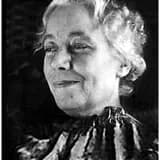
Karen Horney died on December 4, 1952, in New York City, leaving behind a lasting legacy in psychoanalytic theory.
Karen Horney died on December 4, 1952, in New York City, where she had lived and worked for nearly two decades after emigrating from Germany. At the time of her death, she was a towering figure in American psychoanalysis, having founded the American Institute for Psychoanalysis in 1941 after breaking from the New York Psychoanalytic Institute over theoretical disagreements with orthodox Freudian doctrine.
Her death came at the culmination of a career that had fundamentally challenged and reshaped psychoanalytic thinking, particularly regarding female psychology, culture's role in neurosis, and the mechanisms of self-realization and neurotic conflict. Horney's final major work, Neurosis and Human Growth (1950), had been published just two years prior, representing the mature synthesis of her theoretical contributions.
Her passing marked the end of an era for the psychoanalytic institutions she built, but her intellectual legacy continued to grow. The Association for the Advancement of Psychoanalysis and the journal American Journal of Psychoanalysis, which she helped establish, continued to promote her humanistic and culturally-informed approach to psychoanalysis long after her death. Her critique of Freud's theory of penis envy and her development of concepts like the 'idealized self,' 'basic anxiety,' and neurotic 'solutions' (moving toward, against, and away from people) remain foundational to feminist psychology and personality theory, cementing her place as one of the most historically significant women in the history of psychology.