← All women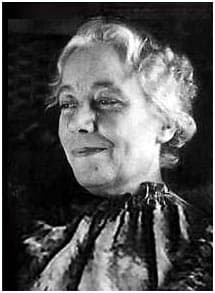
German, American · Medicine
Karen Horney
September 16, 1885 – December 4, 1952
Early Life and Background
Karen Clementine Theodore Danielsen, later known as Karen Horney, was born on 16 September 1885 in Blankenese, then a village near Hamburg in the German Empire.[3][4][9] Her father, Berndt Wackels Danielsen, was a Norwegian-born sea captain and devout Protestant, often described as authoritarian and emotionally distant.[4][16] Her mother, Clotilde ("Sonni") von Ronzelen Danielsen, came from a more cosmopolitan family and was seen as warmer and more supportive.[4][16] Karen had an older half-brother from her father’s first marriage and a full brother, Berndt, to whom she was close in childhood.[4]
Biographers frequently emphasize the emotional tensions in the household: a strict, often critical father; a mother frustrated in her own ambitions; and a sensitive daughter who felt unwanted and plain.[4][6][11] These early experiences of fluctuating affection, perceived rejection, and intense striving for parental approval later informed Horney’s lifelong interest in the psychology of basic anxiety and the child’s need for security. She is said to have decided in early adolescence that she would become a physician, a goal that was unusual for girls in late 19th‑century Germany and initially met with skepticism.[8][10]
Germany at the time was industrializing rapidly, and universities were only beginning, cautiously, to open professional paths to women. The fact that Karen could aspire to a medical career placed her among a small cohort of women who would challenge traditional gender roles through their educational and professional choices.[10]
Education and Medical Training
Horney pursued higher education at a time when German women were still fighting for access to universities. She began medical studies at the University of Freiburg, one of the first German universities to admit women to its medical faculty.[1][10] She later transferred to the University of Göttingen, and eventually to the University of Berlin, where she completed her medical training.[1][10] Wikipedia and several biographical sources list the University of Berlin as the institution from which she earned her medical degree and note that she completed her M.D. in the early 1910s.[4][10]
During these formative years she developed an interest in psychiatry and the newly emerging field of psychoanalysis. She encountered the work of Sigmund Freud and became intrigued by the possibility of a systematic theory of the unconscious and of neurosis. The combination of rigorous medical training and exposure to psychoanalytic ideas prepared her for a career that would bridge clinical practice and theoretical innovation.[3][4]
Her commitment to medicine also represented a personal victory. In an era when women in Germany had limited professional options and were expected to prioritize marriage and motherhood, her completion of medical studies signaled both intellectual independence and a refusal to accept conventional gender norms.[10][16]
Marriage, Early Career, and Entry into Psychoanalysis
In 1909 Karen Danielsen married Oskar Horney, a lawyer and economist.[1][4] The couple eventually had three daughters: Brigitte, Marianne, and Renate.[4][16] Balancing medical training, a young family, and the expectations of a professional husband placed her under considerable strain, and her writings later acknowledged periods of depression and physical illness during these years.[4][6]
Her personal difficulties intensified her interest in psychoanalysis, both as a theory and as a method of treatment. Around 1910 she entered analysis with Karl Abraham, a prominent Berlin psychoanalyst and close collaborator of Freud.[1][4] This training analysis deepened her engagement with psychoanalytic thought and connected her to the growing psychoanalytic community in Germany.
By the early 1910s Horney was practicing medicine and psychiatry in Berlin. She became associated with the circle of analysts surrounding the Berlin Psychoanalytic Institute
According to archival and biographical accounts, she was among the founding members of the Berlin Psychoanalytic Institute when it was formally established in the early 1920s.[1] Within this institution she began to develop her own clinical style and to articulate views that, while still broadly Freudian, placed more emphasis on social and cultural influences than was typical among orthodox Freudians. During the 1910s and 1920s, Horney established herself as both a practitioner and a writer. She published papers in German psychoanalytic journals and presented at professional meetings. Sources note that she delivered early work on topics such as children’s sex education, female adolescence, and the psychology of women.[8][16] Although exact dates for many of these lectures and papers are known only by year, they marked the beginning of her sustained engagement with the question of how gender and culture shape psychological development. Living and working in Weimar-era Berlin, she encountered a vibrant intellectual and artistic scene, as well as intense debates over sexuality, family life, and women’s roles. In this context she began to question aspects of Freud’s theory that treated female development as secondary to or derivative from male development. She became particularly critical of the idea that penis envy—a girl’s supposed envy of male genitalia—was a central organizing principle of female psychology.[3][4] By emphasizing women’s social devaluation, the constraints of patriarchal marriage, and the lack of real opportunities for self-actualization, she argued that much of what Freud had attributed to biology could be better understood as a response to cultural conditions. These early insights laid the groundwork for what would later be recognized as her major contributions to feminist psychology and to an alternative, culturally oriented psychoanalysis.[3][6][12] Horney’s personal life underwent significant change in the mid‑1920s. Her marriage to Oskar Horney became strained, and they separated in the second half of the decade.[1][4] Professionally, she remained an important figure at the Berlin Psychoanalytic Institute, but Germany’s political and economic instability and the rising tide of Nazism created an increasingly difficult environment for intellectuals and progressive clinicians. In the early 1930s she emigrated to the United States. Biographical sources note that she initially went to Chicago, where she accepted an invitation from analyst Franz Alexander to join the newly formed Chicago Institute for Psychoanalysis as a leading training analyst and associate director.[1][10] This move placed her in a major hub of American psychiatry at a moment when psychoanalysis was expanding in influence across the United States. Her Chicago years introduced her to American cultural and clinical contexts very different from those of Berlin. She encountered a more pragmatically oriented medical community and a broader, more heterogeneous patient population. At the same time, she maintained ties with European colleagues and continued publishing in both German and English. The move also furthered her growing independence from strict Freudian orthodoxy, as she had more freedom to articulate her own clinical impressions and theoretical revisions. By the mid‑1930s Horney relocated to New York City, which quickly became the main base of her professional life.[1][4] She joined the New York Psychoanalytic Institute, at that time a major center of Freudian psychoanalysis in America.[1][10] In New York she established a private practice, taught candidates in training, and began to publish books in English that brought her ideas to a wider audience. Horney’s clinical experience with American patients during the Great Depression led her to emphasize the role of culture, social pressures, and interpersonal relationships in the formation of neurosis. She became increasingly convinced that neuroses could not be adequately explained by fixed instinctual drives or by sexual conflicts alone. Instead, she argued, they were rooted in feelings of helplessness, isolation, and basic anxiety arising from disturbed human relationships—especially within the family. These views brought her into conflict with more orthodox Freudian colleagues, who regarded her revisions as a departure from core psychoanalytic principles. Disagreements over theory and training standards escalated, and eventually she was removed from her teaching post at the New York Psychoanalytic Institute.[4][7] This institutional rupture, though personally painful, freed her to build alternative organizations and to articulate her ideas more fully. Horney’s most important theoretical contributions are associated with a series of books published from the late 1930s to the early 1950s. These works collectively advanced a neo‑Freudian framework that emphasized culture and interpersonal relationships, offered a new model of neurosis, and laid foundations for feminist psychology. Across these works, Horney emphasized that personality develops within a cultural and relational matrix. She rejected biological determinism and argued that gender differences in behavior and experience primarily reflect socialization and power structures. Her critique of Freud’s penis envy concept led her to propose that women may instead experience a form of "womb envy" in men, reflecting male anxiety about women’s reproductive capacity and their own dependence on women.[3][4][6] These writings firmly established her as a leading figure in neo‑Freudian psychology, alongside contemporaries such as Erich Fromm and Harry Stack Sullivan, who similarly emphasized interpersonal and cultural factors. Horney is widely regarded as a founder of feminist psychology.[3][4][12] From her earliest papers on female adolescence and women’s sexual development to her later essays collected under the rubric of "feminine psychology," she challenged the view that women’s psychology was inherently deficient or centered on envy of men. She insisted that women’s psychological problems could not be understood without reference to the social devaluation of women, limited access to meaningful work, and expectations of self-sacrificing motherhood. She argued that many so‑called feminine traits—such as passivity, dependence, and masochism—were not biologically determined but rather adaptive responses to cultural constraints.[3][6][12] In her revisions of Freudian theory, Horney addressed topics such as: Her writing provided an early theoretical foundation for later feminist critiques of psychoanalysis and for the broader academic field of women’s and gender studies. Although she did not identify herself with organized feminist movements of her time, her insistence that women’s development had to be studied on its own terms made her a key figure in the intellectual history of feminism.[3][12][16] Following her break with the New York Psychoanalytic Institute, Horney and her supporters founded alternative institutions to develop and disseminate her ideas. In the early 1940s she organized the Association for the Advancement of Psychoanalysis (AAP) and helped establish the American Institute for Psychoanalysis (AIP) in New York.[1][4][7] At the AIP, Horney served as dean and played a central role in shaping the curriculum, training standards, and clinical orientation. The institute emphasized a more flexible, culturally informed approach to psychoanalytic therapy and welcomed a wider range of candidates than traditional Freudian institutes, including many women and individuals from non‑medical backgrounds.[1][7][10] She also became founding editor of The American Journal of Psychoanalysis, which provided a platform for the publication of work aligned with her theoretical perspectives and for dialogues about the future of psychoanalysis.[1] Through these institutional efforts she ensured that her ideas would continue to influence teaching and research beyond her own clinical practice. Throughout her career Horney combined intensive clinical practice with teaching and writing. In New York she maintained a busy private practice, seeing patients from diverse backgrounds, including many immigrants and professionals who were grappling with the stresses of modern urban life.[4][10] She was also affiliated with New York Medical College, where she lectured on psychiatry and psychoanalysis.[10] Colleagues and students remembered her as a demanding but inspiring teacher who encouraged critical thinking and personal reflection. Her approach to supervision emphasized understanding patients’ current interpersonal patterns and the therapeutic relationship, rather than reconstructing childhood events in a rigidly interpretive manner. In addition to formal teaching, she gave public lectures and wrote for educated lay audiences, helping to popularize psychoanalytic ideas in accessible language. Her books reached a broad readership and contributed to the mid‑20th‑century fascination with psychology and self-understanding. Horney’s personal life was marked by both close friendships and significant emotional struggles. Her marriage to Oskar Horney eventually ended in separation, and she raised their three daughters while pursuing an increasingly demanding professional life.[1][4] Biographical accounts describe periods of depression, physical illness, and romantic disappointments, all of which informed her reflections on love, dependency, and self-hate.[4][6] In New York she was part of an intellectually vibrant circle that included sociologist and psychoanalyst Erich Fromm, with whom she had a significant personal and professional relationship.[8][18] Although the details of their relationship remain a matter of scholarly interpretation, the connection influenced the development of both thinkers’ ideas about culture, freedom, and the social roots of neurosis. Her close relationships with her daughters also shaped her thinking about motherhood, female identity, and intergenerational dynamics. According to some accounts, she died surrounded by her daughters, suggesting that family bonds remained central to her life even as she challenged traditional ideals of self-sacrificing womanhood.[8] During the late 1940s and early 1950s, Horney continued to write, teach, and practice. Her final major work, Neurosis and Human Growth (1950), is often considered her masterpiece.[4][5] In it she synthesized decades of clinical observation into a comprehensive theory of the neurotic process as a movement away from the "real self" toward a rigid, idealized self-image. She argued that this alienation from one’s real self was both the core of neurosis and a tragic distortion of the human potential for growth. Despite health problems in her later years, she remained actively engaged in the work of the American Institute for Psychoanalysis and in the editing of The American Journal of Psychoanalysis.[1][7] Her influence extended internationally, as her books were translated into multiple languages and read by clinicians and lay readers in Europe, Latin America, and Asia. On 4 December 1952, Horney died in New York City after a brief illness.[2][3][8] She was 67 years old. She was buried at Ferncliff Cemetery in Ardsley, New York, a short distance from the city where she had done much of her most important work.[2] At the time of her death she was recognized as a major psychoanalytic thinker, although her critiques remained controversial in more orthodox circles. Unlike some later psychologists, Horney did not receive a large number of formal awards during her lifetime; psychoanalysis in her era was less structured around professional honors than around institutional positions and influence. Her leadership roles—as a founding member of the Berlin Psychoanalytic Institute, associate director of the Chicago Institute for Psychoanalysis, dean of the American Institute for Psychoanalysis, and founding editor of The American Journal of Psychoanalysis—functioned as de facto recognition of her stature within the field.[1][3][10] Posthumously, she has been widely honored in scholarly literature as a key figure in neo‑Freudianism and feminist psychology.[3][6][12] Her name appears prominently in histories of psychoanalysis, personality theory, and women in psychology. Institutions associated with her—such as the American Institute for Psychoanalysis and later organizations dedicated to her work—have preserved archives, sponsored conferences, and promoted research on her theories. Horney’s legacy spans several domains: clinical psychoanalysis, personality theory, feminist thought, and the broader culture of self-help and personal growth. In clinical theory, her emphasis on basic anxiety, interpersonal strategies of coping (moving toward, against, and away from others), and the conflict between real and idealized selves significantly influenced later developments in psychodynamic and humanistic therapies.[3][4][6] Concepts resembling her neurotic trends appear in later attachment theory and relational psychoanalysis, which similarly highlight the centrality of relationships and internalized patterns of relating. In feminist and gender studies, she is often cited as the first psychoanalyst to systematically challenge Freud’s conception of female development and to propose an alternative grounded in women’s social realities.[3][12][16] Her arguments that psychology had treated the male experience as normative and pathologized women’s differences anticipated later feminist critiques of science and medicine. Subsequent generations of scholars in women’s studies have drawn on her work as an early example of feminist re-interpretation of canonical theories. In personality psychology, her classification of neurotic needs and orientations contributed to the shift from strictly drive-based models to more interactional views of personality. Her ideas intersect with and foreshadow concepts in the work of Erich Fromm, Harry Stack Sullivan, and later interpersonal theorists, helping to establish the broader movement often called neo‑Freudian or social psychoanalytic psychology.[3][6] In the broader culture, Horney’s writings influenced popular understandings of selfhood, anxiety, and personal growth. Books like The Neurotic Personality of Our Time and Self-Analysis reached non‑specialist audiences and helped normalize the idea that individuals could reflect critically on their own patterns and work toward greater authenticity. Her focus on self-realization and growth resonates with later self-help literature and therapeutic movements. Today, scholars continue to debate aspects of her theory, but there is broad agreement that she played a crucial role in shifting psychoanalysis toward a more culturally sensitive, gender-aware, and relationally oriented discipline. Her career also stands as a historical example of how a woman in the early 20th century could navigate and transform male-dominated academic and clinical institutions. Karen Horney’s life and work illustrate the intertwined histories of psychoanalysis, feminism, and modern conceptions of the self. Born in imperial Germany, educated in some of the first medical schools to admit women, and later active in the intellectual centers of Chicago and New York, she used her position to question entrenched assumptions about human nature, sexuality, and gender. Her critiques of Freud, development of a social and cultural theory of neurosis, and insistence on the legitimacy of women’s experiences have secured her place as one of the most important psychoanalytic thinkers of the 20th century. Her influence persists in contemporary psychotherapy, gender studies, and discussions of how culture shapes the inner life.Early Theoretical Contributions in Germany
Emigration to the United States and the Chicago Period
New York, Institutional Conflicts, and the Development of Neo-Freudianism
Major Works and Theoretical Contributions
Feminine Psychology and Contributions to Women’s Studies
Institution Building: The American Institute for Psychoanalysis and The American Journal of Psychoanalysis
Clinical Practice and Teaching
Personal Life and Relationships
Later Life and Death
Awards, Honors, and Recognition
Legacy and Historical Impact
Assessment
Dated achievements
2 indexed.
- Sep161885Science
Birth of Karen Horney in Blankenese, Germany
Karen Danielsen (later Horney) was born in Blankenese, near Hamburg, Germany, on September 16, 1885.
View details Karen Horney - Britannica - Dec041952Science
Death of Karen Horney in New York City
Karen Horney died on December 4, 1952, in New York City, leaving behind a lasting legacy in psychoanalytic theory.