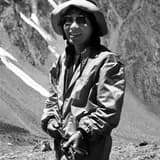
Junko Tabei became the first woman in history to reach the summit of Mount Everest, on May 16, 1975.
On May 16, 1975, Junko Tabei stood atop Mount Everest, the highest point on Earth at 8,849 meters (29,032 feet), becoming the first woman in recorded history to accomplish this feat. She was the 36th person overall to summit the mountain, following in the footsteps of Edmund Hillary and Tenzing Norgay's historic 1953 ascent.
Tabei led the Japanese Women's Everest Expedition, an all-female team she helped organize at a time when sponsors and the Japanese mountaineering establishment were deeply skeptical that women were capable of high-altitude climbing. She reportedly encountered such resistance to the idea of women climbing Everest that she and her team had to secure their own funding, famously being told by one company that she should be raising children instead of climbing mountains.
Her ascent came just days after her expedition survived a devastating avalanche that buried her and several teammates in their tents at Camp II, an ordeal from which she recovered swiftly enough to press on toward the summit with the help of a Sherpa guide, Ang Tshering.
This achievement shattered assumptions about women's physical and psychological capacity for extreme mountaineering and made Tabei an international icon. Her ascent is widely regarded as one of the most significant moments in the history of exploration, opening doors for generations of women climbers who followed, and cementing her legacy as a pioneer who redefined the limits of what women could achieve in the harshest environments on the planet.