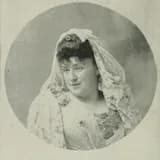
Julie Rosewald led services at Temple Emanu-El in San Francisco as 'Cantor Soprano,' becoming the first known woman to lead an American synagogue service.
On the evening of September 20, 1884, Julie Rosewald stepped into a role no woman in America had held before: she led religious services at Temple Emanu-El in San Francisco, California, under the title "Cantor Soprano." This appointment made her the first woman known to lead services in an American synagogue, effectively establishing her as the first woman cantor in United States history.
The significance of this moment cannot be overstated within the context of nineteenth-century Jewish religious life, where clergy and liturgical leadership roles were exclusively the province of men. Rosewald's arrival at this position was made possible by her already-established reputation as an accomplished international opera singer, whose vocal talent and musical authority helped her transcend the gender barriers of traditional synagogue leadership. Temple Emanu-El, one of the most prominent and progressively-minded Reform congregations in the American West, provided an environment relatively more open to innovation than many East Coast counterparts.
In her role, Rosewald did far more than simply sing; she selected liturgical music, directed the choir, and performed the solo cantorial parts throughout services, effectively serving as the congregation's de facto cantor for nearly a decade. Her pioneering presence opened conversations about women's capacity for religious leadership roles long before formal ordination of women cantors became institutional practice in the twentieth century. Her legacy directly prefigures the ordination of Barbara Streisand-era cantors and, more concretely, the first officially ordained American woman cantor, Barbara Ostfeld, in 1975 — nearly a century later.