← All women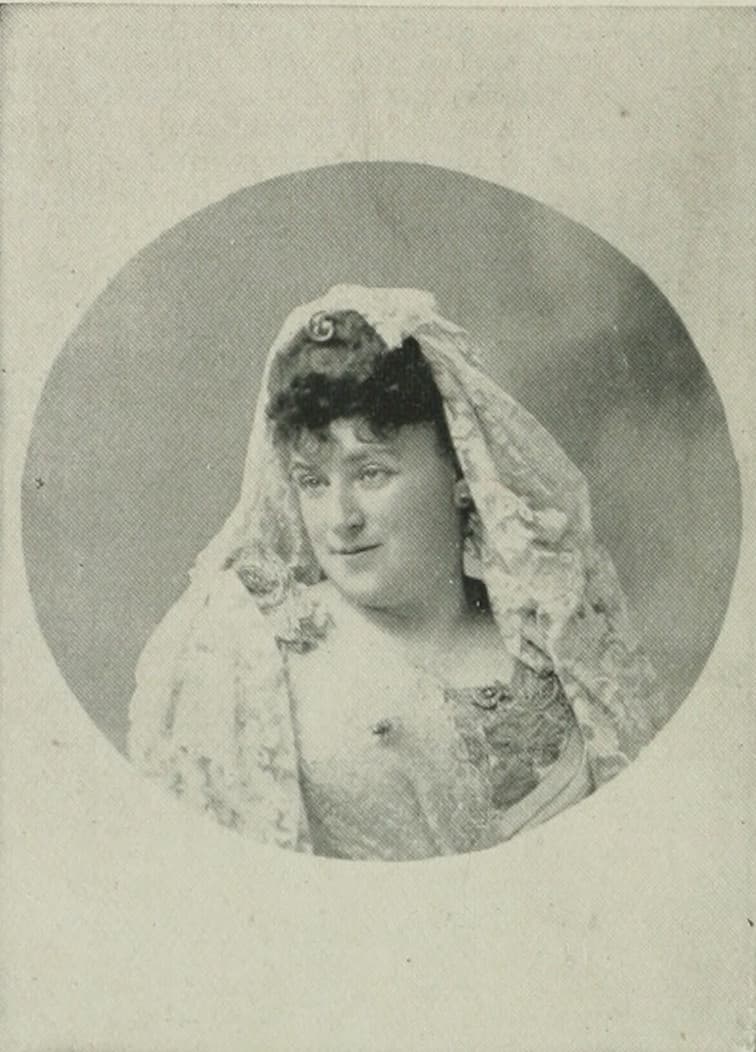
German, American · Arts · Activism
Julie Rosewald
March 7, 1847 – July 16, 1906
Early Life and Background
Julie Eichberg Rosewald was born on March 7, 1847, in Stuttgart, in the Kingdom of Württemberg (now part of Germany).[1][2] She grew up in a German‑Jewish family deeply rooted in synagogue music. Her father, Moritz Eichberg, served as a cantor, and several relatives were involved in liturgical and musical life, providing Julie with an early and intensive exposure to both Jewish ritual chant and European art music.[1][2] This environment shaped her musical aptitude and familiarity with the structures of synagogue worship.
Sources note that Rosewald pursued formal musical training at the Stuttgart Conservatory, where she completed her studies before emigrating.[1] The conservatory education provided her with advanced classical vocal technique, a foundation in repertoire, and exposure to the professional standards of European opera houses. This combination of cantorial heritage and conservatory training would later distinguish her both on the operatic stage and in religious settings.
In 1864, after finishing her studies, Julie relocated to the United States, settling in Baltimore, Maryland, where her sister, the pianist and composer Pauline Eichberg, had already established herself.[1][2] The Eichberg sisters’ presence in Baltimore formed a small but notable center of Jewish musical activity, drawing connections between German Jewish traditions and emergent American cultural life.
Career Beginnings and Development
Rosewald’s early years in the United States were closely linked to her family network and marriage. In 1866, she married Jacob H. Rosewald, a Baltimore‑born violinist and conductor.[1][2] The couple’s shared musical vocation led them to collaborate in concerts and Jewish charitable events, particularly in Baltimore’s Jewish community, where they participated in musical programs and philanthropic initiatives.[2]
Seeking further artistic refinement, Rosewald returned to Europe in 1870 to continue her vocal training.[1] She studied with prominent teachers, including Marongelli, Mara, and the renowned mezzo‑soprano and pedagogue Pauline Viardot‑Garcia, placing her within a lineage of 19th‑century European vocal excellence.[1] These advanced studies prepared her for a high‑level professional operatic career.
Her career as a prima donna began in earnest in 1875, when she joined the Kellogg Opera Company, a major touring ensemble in the United States that showcased leading singers of the era.[1] As a prima donna, she performed principal roles across a wide operatic repertoire. In 1877, she returned to Europe for a new series of engagements, singing in cities such as Nuremberg, Mainz, Stuttgart, Cologne, Amsterdam, Berlin, and Dresden.[1] These performances established her as an international opera artist recognized on both sides of the Atlantic.
In 1880, Julie and Jacob Rosewald were hired by the Abbott Opera Company, with Julie engaged as prima donna and Jacob as the conductor.[1] This dual appointment underscores the couple’s professional stature in opera. Rosewald’s reputation grew as she took on leading roles and displayed what contemporaries described as an extraordinary musical memory: she was reportedly able to memorize a major role in a single night and maintained a repertoire of approximately 125 operas.[1] At one point, she performed in thirty operas over the course of seven consecutive weeks, a remarkable feat that reflected her stamina and versatility.[1]
Major Works, Accomplishments, and Cantorial Role
Rosewald’s most historically significant achievement occurred after her move to San Francisco. In the early 1880s, she and her husband settled there, and she soon became associated with Temple Emanu‑El, one of the city’s leading Reform Jewish congregations.[2] On the evening of September 20, 1884, she first led religious services as "Cantor Soprano" for Temple Emanu‑El.[5] On that date, she became the first woman to lead services in an American synagogue and is considered the first known woman cantor in the United States.[5][2][1]
Rosewald’s role at Temple Emanu‑El extended far beyond that of a solo vocalist. From 1884 to 1893 she served as "Cantor Soprano," effectively functioning as the congregation’s cantor.[1][2] She sang the solo parts in all services, selected the liturgical music, directed the choir, collaborated closely with the organist, and oversaw the musical life of the synagogue.[2] Her position was particularly striking given the Jewish legal and cultural concept of kol isha, which had often been interpreted as restricting the use of women’s singing voices in public religious contexts.[2]
By taking on a public, ritual leadership role in worship, Rosewald broke major gender barriers within American Jewish religious life. Her appointment predated by many decades the advent of women’s ordination as rabbis and official recognition of women cantors in liberal Jewish movements. While her title emphasized her soprano voice, her responsibilities and authority mirrored that of male cantors, making her a de facto chazzan of the congregation.[2]
Beyond her cantorial work, Rosewald continued to cultivate a broad musical career. Contemporary accounts and later historical summaries describe her as an international opera star, composer, author, teacher, and professor of music.[2] She wrote musical texts and taught extensively, gaining particular recognition for her attention to the anatomy and physiology of the singing voice. In 1894, she was appointed professor of singing at the Mills College Conservatory of Music, a position she held until 1902.[1] Her teaching at Mills College contributed to the development of vocal pedagogy in the Bay Area, and she was known as a popular singing teacher in San Francisco.[1][2]
Awards, Recognition, and Professional Reputation
While surviving sources do not list formal awards in the modern sense, Rosewald’s career was marked by significant professional recognition. Her engagement as prima donna with major opera companies such as the Kellogg and Abbott ensembles indicates the esteem she commanded among impresarios and audiences.[1] Reviews and later biographies highlight her "illustrious" international career, her exceptional musical memory, and her sizable operatic repertoire.[1][2]
Within Jewish musical and communal circles, her service at Temple Emanu‑El was itself a form of recognition. The congregation entrusted her with responsibilities that were unusual for a woman, suggesting both her artistic reputation and the progressive orientation of San Francisco’s Reform community in the late 19th century.[2] In modern times, organizations such as the Jewish Women’s Archive have further recognized her historical significance by featuring her in encyclopedia entries and public history projects devoted to pioneering Jewish women.[2][3][5]
Personal Life
Rosewald’s personal and professional lives were closely intertwined. Her 1866 marriage to Jacob H. Rosewald, a violinist, conductor, and fellow German‑Jewish musician, formed a partnership that spanned concert stages and communal events.[1][2] The couple collaborated on Jewish musical programs and charity work, first in Baltimore and later in San Francisco, reflecting a shared commitment to both artistic excellence and communal service.[2]
Sources emphasize her family’s musical heritage rather than details about children or domestic life, which remain less documented in accessible records. The Eichberg/Rosewald circle illustrates how immigrant Jewish families in the 19th‑century United States used music as a vehicle for social integration, philanthropy, and religious expression. Julie’s relationships—with her sister Pauline and her husband Jacob—provided vital professional networks that allowed her to transition between European and American stages and ultimately into synagogue leadership.
Legacy and Historical Impact
Julie Rosewald’s most enduring legacy lies in her role as America’s first known woman cantor and the first woman documented to lead services in an American synagogue.[5][2][1] Her tenure as "Cantor Soprano" at Temple Emanu‑El from 1884 to 1893 represents a significant early challenge to gendered boundaries in Jewish ritual leadership. At a time when both Orthodox and many Reform communities maintained strict limitations on women’s public religious roles, Rosewald’s position demonstrated that congregational practice could evolve to include women’s voices in the most central spaces of worship.[2]
Her career also contributes to the broader history of women in professional music. As an international opera singer with a large and demanding repertoire, she stood within a relatively small cohort of women who achieved sustained success on major stages in the 19th century. Her later work as a teacher and professor of singing extended her influence to younger generations of vocalists, particularly through her emphasis on vocal science and technique.[1][2]
For historians of American Judaism, Rosewald’s story underscores the diversity of practices among late 19th‑century Reform congregations and the sometimes overlooked role of women in shaping synagogue music. Her example complicates narratives that portray women’s ritual leadership as exclusively a mid‑20th‑century phenomenon; instead, she demonstrates that individual congregations experimented with expanded roles much earlier.[2][5]
In recent decades, scholars and institutions such as the Jewish Women’s Archive have revived interest in her life, framing her as a pioneering figure whose contributions anticipate the formal emergence of women cantors and rabbis in liberal Judaism.[2][3][5] She is now frequently cited in discussions of women’s religious leadership, gender and liturgy, and the historical development of the cantorate.
Later Life and Death
In the later phase of her career, Rosewald devoted increasing attention to teaching and institutional work. From 1894 to 1902, she served as a professor of singing at the Mills College Conservatory of Music in California, strengthening the conservatory’s vocal program and continuing to be a sought‑after private teacher in San Francisco.[1] Her expertise in the physiology of singing, combined with her performance experience, made her a distinctive presence in the region’s musical pedagogy.
In 1902, Rosewald retired from professional life due to declining health.[1] She remained in the San Francisco area, where she had established her reputation as a performer, educator, and synagogue music leader. On July 16, 1906, she died in San Francisco, California.[1][2] She was buried in Colma, California, a town known for its cemeteries serving the Bay Area.[1] Her death closed a career that had traversed German conservatories, American and European opera companies, Jewish communal events, and one of the earliest documented instances of female cantorial leadership in the United States.
Although her name was not widely remembered in the decades immediately following her death, later historical recovery projects have reinserted her into the narrative of American Jewish and musical history. Today, Julie Eichberg Rosewald is recognized as a trailblazing figure whose work helped broaden the possibilities for women in both sacred and secular musical spheres.
Dated achievements
3 indexed.
- Mar071847Science
Birth of Julie Eichberg (Rosewald) in Stuttgart
Julie Eichberg, later known as Julie Rosewald, was born in Stuttgart, Kingdom of Württemberg, into a German-Jewish family.
View details Julie Rosewald - Wikipedia - Sep201884Science
First woman to lead services in an American synagogue
Julie Rosewald led services at Temple Emanu-El in San Francisco as 'Cantor Soprano,' becoming the first known woman to lead an American synagogue service.