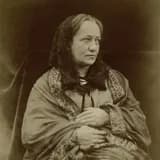
On 29 January 1864, Cameron photographed nine-year-old Annie Philpot, calling it her 'first success' in photography.
On 29 January 1864, barely two months after receiving her camera, Julia Margaret Cameron photographed nine-year-old Annie Philpot, a neighbor's child, at Dimbola Lodge on the Isle of Wight. Cameron herself recorded the moment with evident joy, later writing that she considered the resulting image her "first success" and famously exclaiming that she had "almost worshipped" the picture upon seeing it emerge.
This photograph marked the true beginning of Cameron's celebrated career. Unlike the stiff, formally posed studio portraits common to commercial photographers of the period, Cameron's image of Annie displayed an intimacy and emotional directness that would become her signature style. She deliberately used soft focus and dramatic, chiaroscuro-like lighting, techniques that departed from the sharp, documentary clarity most photographers of the day prized.
The significance of this achievement lies not only in its personal meaning to Cameron but in its historical role as the inaugural work in a body of art that would influence the trajectory of photographic portraiture. It demonstrated that photography could be treated as a fine art medium capable of conveying psychological depth and beauty, rather than mere mechanical reproduction. As a woman entering a nascent technical field dominated by men, Cameron's early triumph with "Annie" set the stage for a prolific decade of work that would cement her reputation as one of the most important portraitists in the history of photography.