← All women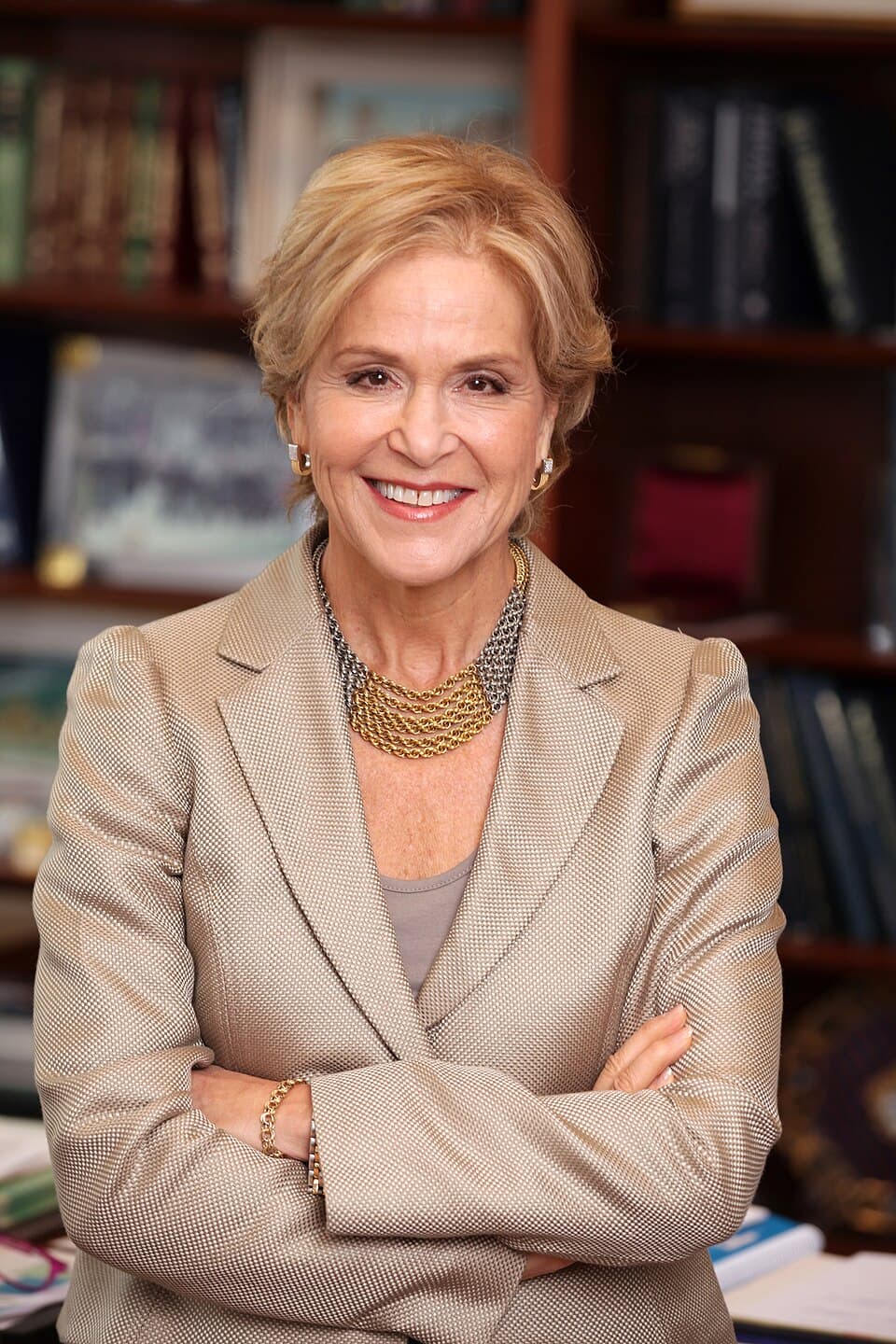
American · Science · Politics · Activism
Judith Rodin
September 9, 1944 – present
Early life and education
Judith Seitz Rodin was born on September 9, 1944, in Philadelphia, Pennsylvania. Raised in a Jewish family in West Philadelphia, she attended local public schools and later Girls High School, experiences that grounded her in the city that would later become central to her institutional leadership. Her early life unfolded in the postwar period, when opportunities for women in science, medicine, and senior university administration remained limited, making her later career especially notable.
Rodin earned a scholarship to the University of Pennsylvania, where she completed her A.B. in psychology in 1966. She then pursued graduate study at Columbia University, receiving a Ph.D. in psychology in 1970. Her academic training placed her in psychology at a moment when the field was broadening its reach into health, behavior, and medicine. That interdisciplinary orientation would become one of the defining features of her career.
Early career
After receiving her doctorate, Rodin began her professional career as an assistant professor of psychology at New York University from 1970 to 1972. She then joined Yale University in 1972, where she spent the next two decades rising through the academic ranks. At Yale she became associated with the development of behavioral medicine and health psychology, fields that brought psychological insight to the study of health, illness, aging, obesity, and eating disorders.
Rodin’s Yale career advanced steadily. She became an associate professor, then professor of psychology and director of graduate studies, and later Philip R. Allen Professor of Psychology, Medicine, and Psychiatry. She also served in major administrative roles, including chair of the Department of Psychology, dean of the Graduate School, and provost of the university. These appointments made her one of the few women of her generation to hold such high-level leadership positions at an elite research university. The path was unusual not only because of gender barriers but also because psychology and medicine were still often treated as distinct domains rather than connected fields.
Scholarship in behavioral medicine and health psychology
Rodin became widely recognized as a pioneering researcher in behavioral medicine and health psychology. Her work helped establish how psychological factors influence health behaviors, body weight, aging, and chronic illness. She was particularly known for research on obesity, eating disorders, women’s health, and the psychology of aging. In these areas, she contributed to a broader scholarly shift away from purely biomedical explanations toward models that considered behavior, environment, and social context.
Her academic work was influential because it entered debates that had practical consequences for medicine and public health. At a time when women were often underrepresented in senior scientific roles, Rodin became an important figure not only because of her research output but also because of the example she set as a woman succeeding in high-level academic science and administration. Her scholarship and leadership reinforced one another: her credibility as a researcher strengthened her administrative authority, while her administrative influence gave her a larger platform from which to shape higher education and philanthropy.
President of the University of Pennsylvania
On December 17, 1993, Rodin was formally named the next president of the University of Pennsylvania. She took office on July 1, 1994, becoming the first permanent female president of an Ivy League institution and the first Penn alumna to lead the university. The appointment was historically significant because it broke a longstanding gender barrier at the center of American higher education. For the first time, one of the country’s most prestigious academic institutions entrusted its long-term leadership to a woman.
During her decade at Penn, Rodin led a period of financial strengthening, academic innovation, and physical and community revitalization. Her presidency is closely associated with efforts to improve the university’s standing and to deepen its relationship with West Philadelphia. Penn’s institutional history describes her tenure as transformative, and later retrospectives consistently emphasized the scope of the changes achieved under her leadership. Her presidency also carried symbolic weight far beyond Penn: it helped normalize the idea that women could lead the most elite universities in the United States.
Rodin announced on June 20, 2003, that she would resign in June 2004, and she stepped down on June 20, 2004. By then, her record at Penn had already established her as a landmark figure in university history. She later became president emerita, preserving her connection to the institution and to the precedent she had helped create.
President of The Rockefeller Foundation
In March 2005, Rodin was elected president of The Rockefeller Foundation, becoming the first woman to hold the office in the foundation’s history. The move extended her leadership from higher education to global philanthropy, giving her a platform to influence policy and investment strategies at scale. Under her leadership, Rockefeller emphasized partnerships with business, government, and the philanthropic sector to address urban transformation, livelihoods, ecosystem resilience, and health.
Rodin’s Rockefeller years further expanded her reputation as a strategist focused on long-term social impact. She became closely associated with the concepts of resilience and impact investing, helping bring those ideas into mainstream philanthropic and policy conversations. Her presidency lasted until 2017, and it cemented her status as one of the most influential women in philanthropy.
Books, public writing, and boards
Rodin has written extensively throughout her career, publishing scholarly articles, chapters, and books on psychology, leadership, philanthropy, and resilience. She is credited with more than 200 academic articles and chapters and with numerous books, including The Resilience Dividend and The Power of Impact Investing. Her writing reflects the same interdisciplinary approach that defined her scholarship and leadership: she has consistently argued that durable social change requires linking research, institutional strategy, and practical action.
In addition to her academic and philanthropic work, Rodin has served on major corporate and civic boards, including those of large public companies and policy-oriented organizations. Such roles were part of a broader pattern in which women leaders of her generation increasingly participated in governance beyond universities, bringing expertise from academia into the broader public sphere.
Honors and recognition
Rodin has received wide recognition for her leadership and scholarly achievements. She was honored for her role in higher education, philanthropy, and feminist history, including recognition from institutions that celebrate barrier-breaking women. She has also been cited among influential women in business and philanthropy and has been recognized by universities and civic organizations for her service.
Her honors matter not only as personal accolades but also as evidence of changing institutional norms. Rodin’s career unfolded during decades when women were still underrepresented in the presidencies of major universities and foundations. The recognition she received helped validate the importance of women’s leadership in fields that had long been dominated by men.
Personal life
Rodin has been married three times. Public sources identify her family life as part of her biography, though her professional accomplishments have generally remained the focus of most accounts. She has one son. Her ability to sustain a high-profile public career while navigating major institutional leadership roles is often noted as part of the context of her achievement, though she has generally maintained a private personal life relative to her public work.
Legacy
Judith Rodin’s legacy is most clearly defined by her barrier-breaking leadership. She became the first woman to lead a permanent Ivy League presidency and later the first woman president of The Rockefeller Foundation. Those firsts were not merely symbolic. They were tied to substantive accomplishments in university governance, urban engagement, philanthropy, and the application of social science to public problems.
Her influence also lies in the institutional precedents she helped establish. Rodin’s career showed that women could lead complex research universities and major philanthropic foundations with strategic authority. In that sense, she helped expand the acceptable image of leadership in American higher education and philanthropy. Her career connected scholarship, administration, and public purpose in a way that influenced later generations of women entering academic and nonprofit leadership.
For women’s history, Rodin stands as a case study in the gradual dismantling of formal and informal barriers in elite institutions. She did not simply occupy newly opened doors; she helped prove that those doors could remain open and that women’s leadership could reshape the institutions themselves.
Dated achievements
6 indexed.
- Sep091944Science
Birth of Judith Seitz (Judith Rodin)
Judith Seitz, later known as Judith Rodin, was born in Philadelphia, Pennsylvania.
View details Judith Rodin - Wikipedia - Dec171993Science
Named First Woman President of an Ivy League University
Rodin was named the next president of the University of Pennsylvania, becoming the first woman appointed to permanently lead an Ivy League institution.