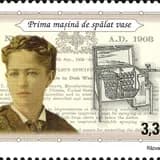
On Apr 29, 1914, an improved dish-washing-machine patent application (later US 1,223,380) tied to Garis-Cochrane Mfg. Co. was filed.
On April 29, 1914, a patent application for an improved dish‑washing machine associated with the Garis‑Cochrane Manufacturing Co. was filed with the U.S. Patent Office. The application, later issued as U.S. Patent No. 1,223,380, listed Josephine Garis‑Cochrane among its inventors.
This filing came the year after Cochrane’s death and reflects how her original ideas continued to evolve within the company she had founded. The improved design further refined mechanical operation and water distribution, adapting the machine for more efficient and reliable service in commercial settings. Even though she did not live to oversee this particular application, the inclusion of her name and the continuation of her core design principles underscore the enduring influence of her engineering work.
In the broader historical context, the 1914 filing illustrates the transition of her dishwasher from a single inventor’s project to a sustainable industrial technology. The Garis‑Cochrane enterprise was by then on the trajectory that would lead to acquisition by Hobart Manufacturing and, eventually, integration into the KitchenAid brand, connecting Cochrane’s nineteenth‑century workshop to twentieth‑century mass‑market appliances.
The date also highlights how rare it was for a woman’s invention to be continually improved and commercialized by a corporate successor rather than disappearing from the record. The 1914 application stands as testament to the technical robustness of Cochrane’s original concept and its capacity to be adapted as commercial dishwashing requirements grew more complex in the early twentieth century.