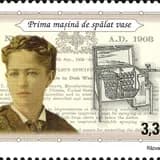
On Apr 24, 1917, US Patent No. 1,223,380 for an improved dish-washing machine listing Josephine Garis-Cochrane was granted.
On April 24, 1917, the U.S. Patent Office granted Patent No. 1,223,380 for an improved dish‑washing machine, listing Josephine Garis‑Cochrane among the inventors. This posthumous patent extended and refined the technology she had pioneered decades earlier.
The patent built on her original water‑pressure concept, introducing mechanical and hydraulic enhancements to better serve the needs of commercial kitchens. By 1917, hotels, institutions, and large restaurants demanded greater throughput, reliability, and ease of operation. The improved design responded to these pressures, demonstrating that Cochrane’s fundamental insight—that dishes could be cleaned effectively by directed jets of hot water within organized racks—remained sound and adaptable.
Although Cochrane had died in 1913, the continued development of her machine by Garis‑Cochrane Manufacturing Co. and subsequent corporate successors shows how her invention transitioned into a mature industrial technology. The grant of this patent helped consolidate the company’s intellectual property portfolio and contributed to the value that led to Hobart Manufacturing’s acquisition in 1916, a lineage that ultimately fed into the modern KitchenAid dishwasher lines.
Historically, the 1917 patent underscores the longevity of a woman’s technical contribution in a sector where female inventors were rare. It illustrates that her work was not a one‑off curiosity but a foundational technology capable of systematic improvement. The date marks the moment when Cochrane’s legacy, now embedded in corporate engineering practice, was formally recognized once more in the patent record, reinforcing her status as a key figure in the evolution of mechanical dishwashing.