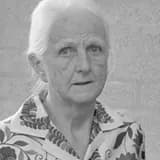
Joan Violet Maurice was born in Camberley, Surrey, England, later becoming one of the most influential economists of the 20th century.
Joan Violet Maurice was born on 31 October 1903 in Camberley, Surrey, England, into an intellectually distinguished family. Her father, Frederick Maurice, was a British Army general, and her family had a long tradition of academic and public service, including a great-grandfather who was a noted theologian and social reformer.
This upbringing exposed young Joan to rigorous intellectual debate and a sense of social responsibility from an early age, traits that would later define her approach to economics. She would go on to attend Girton College, Cambridge, one of the few institutions granting women access to higher education at the time, where she developed the analytical foundations for her future career.
Her birth marks the beginning of a life that would fundamentally reshape economic theory. Joan Robinson would become a central figure in the Cambridge school of economics, a key interpreter and developer of Keynesian theory, a pioneer of the theory of imperfect competition, and one of the most prominent women in the history of economic thought—despite the significant gender barriers of academia in her era, which included Cambridge University not granting women full degrees until 1948.
Her later career as a full professor at Cambridge and her global influence on economic policy debates make her birth a foundational moment for 20th-century economics.