← All women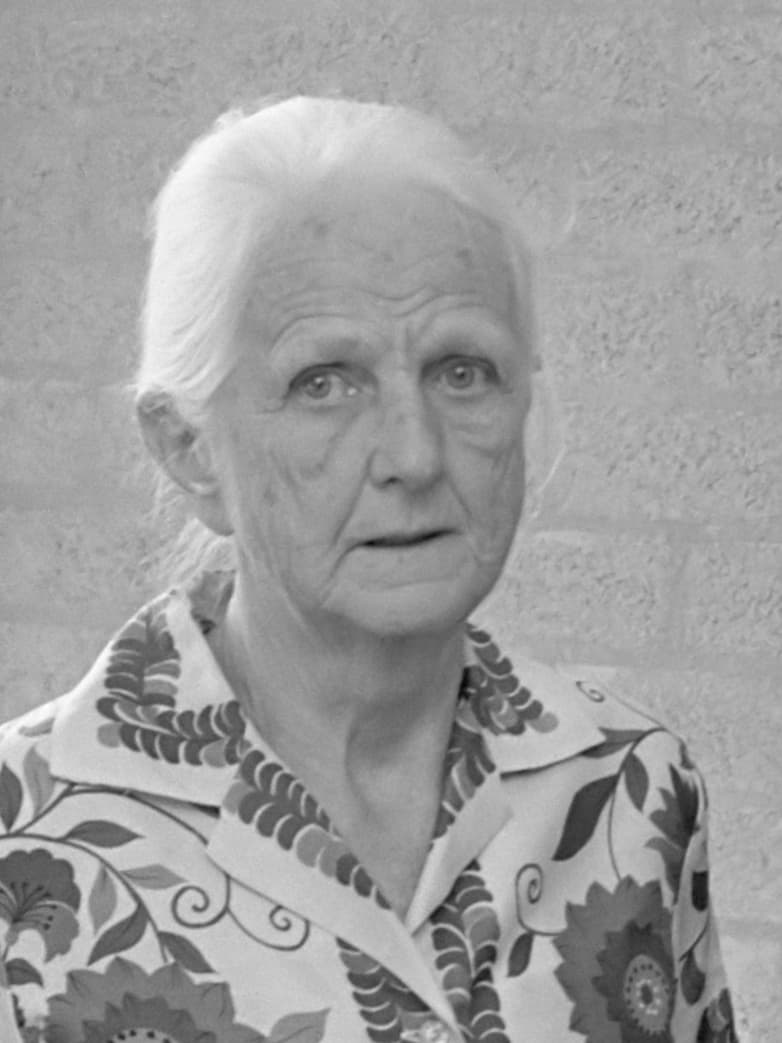
British · Science
Joan Robinson
October 31, 1903 – August 5, 1983
Early life and education
Joan Violet Robinson (née Maurice) was born on 31 October 1903 in Camberley, Surrey, England, into a family with strong connections to military service and academic life. Her father was Major-General Sir Frederick Barton Maurice, and her mother was Helen Marsh. Robinson later became one of the most influential economists of the twentieth century, but her path began in a period when women’s access to elite education and professional authority was still sharply limited.
She attended St Paul’s Girls’ School in London before entering Girton College, Cambridge, where she studied economics. Cambridge in the early twentieth century was a demanding and often inhospitable environment for women, who were permitted to study but denied full equal status for much of the period. Robinson graduated in 1925, and her training there brought her into contact with the Marshallian tradition and with economists who would shape her early intellectual development. The university would later recognize her academic standing more fully, but during her student years she was already navigating a system in which women were expected to prove themselves repeatedly in order to be taken seriously.
Robinson married the economist Edward Austin Gossage Robinson in 1926. The marriage was personally and intellectually important; Austin Robinson was himself a Cambridge economist, and the two shared an academic environment that encouraged debate and collaboration. They had two daughters. Robinson’s personal life, like much of her career, unfolded inside the Cambridge world, but her scholarly identity remained distinct and formidable.
Early career and the Keynesian revolution
Robinson’s early career developed in the intellectually intense environment of Cambridge economics during the interwar period. The collapse of the global economy after 1929 and the rise of mass unemployment made older neoclassical explanations seem inadequate to many economists. Robinson was among the earliest and most ardent supporters of John Maynard Keynes after 1936, helping to interpret and extend Keynes’s ideas at a time when they were still controversial.
Her first major book, The Economics of Imperfect Competition, appeared in 1933. It became a landmark text because it challenged the idealized model of perfect competition and showed how firms could possess market power, influence price, and operate under conditions of monopoly or near-monopoly. The book helped launch what became known as the monopolistic competition revolution, and it established Robinson as an original theorist rather than simply a commentator on the work of others. One of the book’s most enduring contributions was its analysis of monopsony, a market structure with a single buyer, which became widely used in labor economics and industrial organization.
In 1937, she published Introduction to the Theory of Employment, a concise and influential work that helped clarify Keynesian ideas about unemployment, effective demand, and macroeconomic policy. Robinson was not merely repeating Keynes; she was helping to shape the post-Keynesian reception of his work and to make it usable for further theoretical debate. Her writing in this period helped bridge the gap between abstract theory and the urgent policy problems of depression-era capitalism.
Engagement with Marxism and capital theory
Robinson’s intellectual range widened further in the 1940s. In 1942, she published An Essay on Marxian Economics, a work that reflected her willingness to engage seriously with Karl Marx at a time when such work was uncommon in mainstream British economics. The book contributed to renewed interest in Marxian analysis and demonstrated that Robinson’s thought could not be confined to a single school. She was interested in the dynamics of accumulation, distribution, class, and exploitation, and she saw economics as a discipline that had to confront real capitalist institutions rather than idealized abstractions.
Her most ambitious book, The Accumulation of Capital, appeared in 1956. It became central to Cambridge debates over capital theory and long-period growth. Robinson explored how capital accumulates over time, how growth interacts with investment and distribution, and why the measurement of capital itself is theoretically unstable. These arguments later fed into the famous Cambridge capital controversies, where Robinson became one of the most visible critics of neoclassical aggregation and equilibrium assumptions. Her work helped demonstrate that the concept of “capital” was not a simple measurable quantity but a theoretically loaded category whose meaning depended on the structure of the model being used.
She followed this with Essays in the Theory of Economic Growth in 1965, which extended her analyses of accumulation, growth, and historical time. Across these works, Robinson became one of the most important architects of post-Keynesian economics, a tradition that emphasized instability, historical process, imperfect knowledge, and the social relations embedded in markets.
Public service, recognition, and institutional barriers
Robinson’s reputation as a serious theorist eventually brought her into public policy and elite institutional life. In 1948, she became the first economist appointed to the UK Monopolies and Mergers Commission, a sign that her expertise on imperfect competition had practical relevance for regulation and market oversight. This appointment was notable not only for the substance of her work but also for the barriers it reflected: women economists were still rare in positions of state influence, and Robinson’s inclusion signaled a slow opening of elite economic institutions.
That same postwar era also exposed a striking gender injustice in academic recognition. Robinson had graduated from Cambridge in 1925, but like many women of her generation, she did not receive the full formal degree recognition available to men at the time. Cambridge’s eventual recognition of women graduates came much later, and Robinson’s experience illustrates the institutional obstacles faced by highly qualified women in British higher education. Her success therefore had a double meaning: it was an intellectual triumph and a quiet rebuke to the structures that had constrained women’s advancement.
In 1964, she was elected a Fellow of the British Academy, one of the highest scholarly honors in the United Kingdom. In 1980, Cambridge awarded her an honorary degree, a symbolic acknowledgment from the institution where she had spent much of her professional life and where she had long been one of the most prominent economists associated with the university. Robinson was also frequently discussed in the 1970s as a leading candidate for the Nobel Memorial Prize in Economic Sciences, though she never received it. Even without the prize, she was widely regarded as one of the central figures in twentieth-century economic thought.
Personal life and intellectual partnerships
Robinson’s marriage to Austin Robinson placed her in a partnership that was both personal and scholarly. The two lived within the Cambridge academic milieu, where economics, policy debate, and intellectual controversy were part of everyday life. Although her husband was also an economist, Joan Robinson’s reputation eventually far surpassed his. She was known for her forceful style, her independence of mind, and her willingness to challenge colleagues regardless of rank or prestige.
She had two daughters, and her family life unfolded alongside a demanding professional career. Women of her generation often faced pressure to choose between scholarship and domestic life; Robinson’s career shows both how such choices were constrained and how determined intellectual work could still carve out space within them. Her life was not free of the gendered expectations of her era, but she refused to be limited by them.
Later years and death
In her later years, Robinson remained an active and often provocative presence in economic debate. She continued to criticize mainstream theory, defend historical and institutional approaches, and argue that economic analysis had to remain grounded in the realities of capitalism rather than formal elegance alone. Her writing and public interventions retained the mixture of sharpness, originality, and contrarian energy that had long characterized her career.
Robinson died in Cambridge on 5 August 1983. By then, her legacy was already secure. She had become one of the most cited and discussed economists of her generation, and her influence reached far beyond the particular theories she developed. She helped define the language of imperfect competition, made Keynesian ideas more analytically precise, challenged neoclassical capital theory, and opened intellectual space for post-Keynesian and heterodox economics.
Legacy
Joan Robinson’s historical importance lies in both substance and symbolism. Substantively, she changed how economists think about market structure, employment, capital, growth, and accumulation. Symbolically, she demonstrated that a woman could stand at the center of high economic theory in an era when the field was overwhelmingly male. Her work on imperfect competition remains foundational; her critiques of capital theory helped reshape long-running debates; and her defense of historically grounded analysis influenced generations of heterodox economists.
She has often been described as one of the most important women in the history of economic thought, and some scholars have called her the greatest female economist of the twentieth century. That assessment reflects not only the originality of her ideas but also the obstacles she overcame to produce them. Robinson’s career is a case study in intellectual audacity, institutional persistence, and the capacity of a single scholar to alter the terms of an entire discipline.
Dated achievements
2 indexed.
- Oct311903Science
Birth of Joan Robinson
Joan Violet Maurice was born in Camberley, Surrey, England, later becoming one of the most influential economists of the 20th century.
View details Joan Robinson - Wikipedia - Aug051983Science
Death of Joan Robinson
Joan Robinson died in Cambridge, England, leaving behind a legacy as one of the most important economists—and the most important woman economist—of the 20th century.