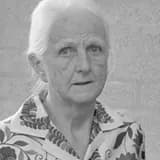
Joan Robinson died in Cambridge, England, leaving behind a legacy as one of the most important economists—and the most important woman economist—of the 20th century.
Joan Robinson died on 5 August 1983 in Cambridge, Cambridgeshire, England, the city that had been the center of her intellectual life for nearly six decades. At the time of her death, she was widely regarded as one of the most significant economists of the twentieth century and, in the assessment of many historians of economic thought, the most important woman ever to have worked in the field.
Robinson's career had spanned the founding of modern macroeconomics through her close engagement with John Maynard Keynes and the 'Cambridge Circus' in the early 1930s, to her later work on capital theory, economic growth, and development economics. She had been a perennial subject of speculation as a potential Nobel Memorial Prize in Economic Sciences laureate during the 1970s, though the prize, first awarded in 1969, was never bestowed upon her—a fact many scholars have since cited as one of the notable omissions in the prize's history, possibly reflecting the gender and heterodox biases of the economics profession at the time.
Her death marked the end of an era for the Cambridge school of economics, but her extensive body of published work—including The Economics of Imperfect Competition, The Accumulation of Capital, and her many contributions to Keynesian and post-Keynesian theory—ensured her lasting influence. Her legacy continues through the many economists she trained and influenced, and through ongoing academic engagement with her theoretical contributions.