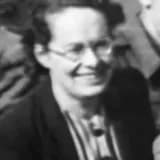
Joan Clarke died on 4 September 1996 in Headington, Oxford, England, at the age of 79, after a lifetime of pioneering cryptanalytic and numismatic work.
Joan Clarke, by then known as Joan Murray following her marriage, died on 4 September 1996 in Headington, Oxford, England, at the age of 79. Her death marked the passing of one of the last surviving members of the celebrated Bletchley Park codebreaking team that had helped shorten the Second World War through the breaking of German Enigma ciphers.
For much of her life after the war, Clarke's contributions remained obscured by the strict secrecy provisions of the Official Secrets Act, which she honored scrupulously, rarely discussing her wartime work even with close family. It was only in the decades following the declassification of Bletchley Park's operations in the 1970s that her role — as deputy head of Hut 8 and one of the few women to reach a senior cryptanalytic position — became more widely known and appreciated.
Her death prompted renewed interest in her biography, particularly after the release of the 2014 film The Imitation Game, in which her relationship with Alan Turing and her codebreaking work were dramatized for a global audience, cementing her posthumous recognition as a key figure in the history of computing, cryptography, and women in STEM.
Clarke's legacy endures through numerous honors, including a building named after her at GCHQ and continued scholarly and popular interest in her life and work.