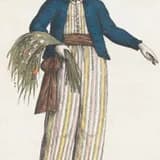
Upon the expedition's arrival at Tahiti on 7 April 1768, Tahitians quickly recognized Baret was a woman, exposing her two-year disguise.
Bougainville's expedition reached Tahiti on 7 April 1768, a moment that became a turning point in Jeanne Baret's remarkable voyage. According to multiple accounts from crew members, Tahitians who greeted the French sailors almost immediately identified Commerson's valet "Jean" as a woman, reportedly surrounding her and exclaiming about her true sex even before the French crew fully grasped what was happening.
This moment of exposure, occurring after roughly a year and a half of successful concealment through harsh Atlantic crossings and the perilous rounding of Cape Horn, marked the effective end of Baret's disguise, though some accounts suggest suspicions among the crew had already been growing. The revelation placed her in a precarious position, technically in violation of French naval law, and Bougainville himself later wrote about the incident in his own journals of the voyage.
The Tahiti exposure is historically significant not only as a dramatic episode in Baret's personal story but also as an early recorded cross-cultural encounter in which Polynesian observers' perceptions directly altered the course of a European scientific expedition. Rather than being immediately expelled from the ship, Baret continued in her role, a testament to Commerson's protection and her own indispensability to the botanical work, though her remaining time on the voyage was undoubtedly more fraught and closely scrutinized.