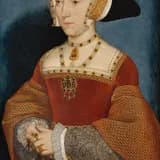
Jane Seymour gave birth to Prince Edward at Hampton Court Palace, providing Henry VIII with his only legitimate surviving son and heir.
On 12 October 1537, Jane Seymour gave birth to Prince Edward at Hampton Court Palace, achieving what none of Henry VIII's previous wives had managed: producing a legitimate, surviving male heir to the English throne. The birth followed a grueling labor of over two days, a fact noted with concern by contemporaries given the medical limitations of the era.
This event stands as a genuine historical first among Henry's six wives—Jane alone succeeded in delivering a son who would survive infancy and eventually ascend the throne as King Edward VI. The birth was met with extraordinary public celebration across England, including the ringing of church bells, bonfires, and the firing of two thousand rounds from the Tower of London's guns.
The significance of this event cannot be overstated in the context of the English Reformation. Henry's split from the Catholic Church, his annulment of his marriage to Catherine of Aragon, and his tumultuous relationship with Anne Boleyn had all been driven substantially by his need for a male heir to secure the Tudor dynasty. Edward's birth appeared to vindicate years of religious and political upheaval.
Tragically, the birth also set in motion the circumstances that would lead to Jane's death less than two weeks later, as complications from the delivery proved fatal. Nevertheless, her achievement in producing Henry's heir secured her unique and favored place in his memory and in the historical narrative of the Tudor dynasty.