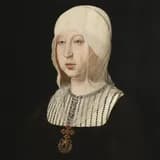
Columbus, backed by Isabella, made landfall in the Bahamas, opening the Americas to sustained European exploration.
On 12 October 1492, during the voyage sponsored by Isabella, Christopher Columbus made landfall in the Bahamas, on an island he named San Salvador. This moment is widely commemorated as the "discovery" of the New World by Europeans, though millions of Indigenous people already inhabited the continents.
The landfall confirmed the feasibility of westward transatlantic navigation and provided tangible evidence that Isabella’s investment had yielded results. News of the voyage’s success quickly reached the Castilian court, encouraging further expeditions and claims.
Historically, 12 October 1492 is treated as a world-historical turning point: it initiated sustained European engagement with the Americas, leading to colonization, forced labor regimes, disease-driven depopulation, and cultural transformations. Under Isabella’s authority, Spanish policy soon grappled—often violently—with the governance and evangelization of Indigenous societies.
In women’s history, the Bahamian landfall underscores Isabella’s indirect but decisive role in reshaping global geography and empire. As a queen regnant whose patronage enabled the voyage, she exemplifies how women in power could influence events far beyond their immediate realms, with consequences that continue to be debated and felt centuries later.