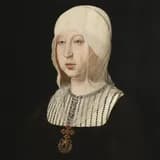
Died at Medina del Campo after a 30-year reign that reshaped Castile, completed the Reconquista, and launched overseas expansion.
On 26 November 1504, Isabella I of Castile died at Medina del Campo at about fifty-three years of age, after a reign of three decades. She passed away in the castle of La Mota, having seen her health decline amid family losses and political burdens.
In her will, Isabella reaffirmed her commitment to Catholic faith, the unity of her realms, and the rights of Indigenous peoples in the newly conquered Americas, though implementation of those principles remained uneven. She designated her daughter Joanna as heiress, with Ferdinand to govern in her absence, setting the stage for complex succession struggles and the eventual rise of the Habsburgs.
Her death closed a chapter in which Castile had been transformed from a fragmented medieval kingdom into the core of an expansive early modern monarchy. Institutions she strengthened—the reformed royal council, the Santa Hermandad, and the Inquisition—would endure, as would the consequences of her policies toward Jews, Muslims, and American Indigenous peoples.
In women’s history, Isabella’s death marks the end of one of the most consequential female reigns in Europe, prompting reflection on how her exercise of sovereign authority combined state-building, religious zeal, and imperial ambition, leaving a legacy simultaneously celebrated and contested in historical memory.