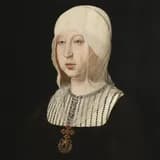
Proclaimed Queen of Castile in Segovia after Henry IV’s death, beginning her sovereign rule and sparking a succession civil war.
On 11 December 1474, following the death of her half-brother Henry IV of Castile, Isabella was formally proclaimed Queen of Castile in Segovia. She asserted her succession in direct competition with Henry’s daughter Juana, whose legitimacy was widely disputed.
The proclamation marked the beginning of Isabella’s personal reign over Castile and ignited a civil war (1474–1479) as rival factions rallied behind competing claimants. Despite the turmoil, Isabella took immediate steps to establish her authority—securing key fortresses, negotiating with nobles, and presenting herself as a lawful, divinely sanctioned monarch.
This moment is historically significant as a woman claiming and exercising full sovereign power over one of Europe’s largest kingdoms. Isabella did not rule merely as consort; she was crowned in her own right, issued laws, and oversaw the restructuring of royal institutions.
In women’s history, her proclamation stands as a major milestone: a queen regnant assuming the throne of Castile and holding it for three decades, demonstrating that female succession, though contested, could prevail and profoundly shape the religious, political, and imperial future of early modern Europe.