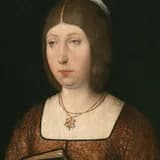
Isabella I dies at the royal palace in Medina del Campo, Castile, aged 53, after a thirty-year reign.
Queen Isabella I of Castile died on 26 November 1504 at the royal palace in Medina del Campo, Castile, at the age of 53. Her health had declined significantly in her final years, worsened by grief over the deaths of her son Juan, her daughter Isabella, and her infant grandson, as well as the mental instability of her daughter Joanna, who would inherit the Castilian throne.
In her will, Isabella left detailed instructions regarding the governance of Castile, the treatment of indigenous peoples in the Americas, and her burial wishes, expressing a desire for a modest funeral reflecting her personal piety despite her immense political stature. She was initially interred at the Alhambra in Granada, a site she had chosen to commemorate the completion of the Reconquista, before later being moved to the Royal Chapel of Granada alongside Ferdinand.
Isabella's death marked the end of a thirty-year reign that had fundamentally reshaped Spain and the wider world: she had unified the crowns of Castile and Aragon in partnership with Ferdinand, completed the centuries-long Reconquista, established the Spanish Inquisition, expelled Spain's Jewish population, and sponsored the voyages of Columbus that opened the Americas to European colonization. Her reign is widely regarded by historians as the foundation of Spain's emergence as a global imperial power and one of the most consequential in European history.