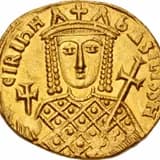
On 24 August 787, Irene convenes the Second Council of Nicaea, restoring the veneration of icons and ending the harshest phase of Byzantine iconoclasm.
On 24 August 787, the Second Council of Nicaea formally opened under the authority of Empress Irene and her son Constantine VI, with Irene as the driving force. Convened to resolve the decades‑long iconoclastic controversy, the council is counted as the Seventh Ecumenical Council of the Christian Church.
Irene, an ardent iconophile, orchestrated the council’s assembly in Nicaea after a failed attempt to hold it in Constantinople. She brought together bishops and imperial officials who endorsed the restoration of the veneration of icons, reversing the iconoclast policies of her predecessors.
The council’s decrees distinguished between worship due to God alone and veneration accorded to images, thereby legitimizing icons as integral to Christian devotion. This was a crucial theological and political settlement for the Byzantine Empire, where imperial ideology and religious practice were tightly intertwined.
Historically, 24 August 787 marks a watershed: Irene became the first woman to convoke and effectively preside over an ecumenical council of the Christian Church, acting as the chief architect of policy that shaped Eastern Orthodox Christianity for centuries. Her success in restoring icons not only ended the harshest phase of iconoclasm but also enhanced the prestige of monastic communities and devotional art, leaving an enduring legacy on Byzantine culture and global Christian heritage.