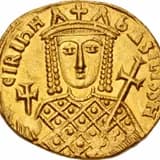
Traditional commemoration of Irene of Athens’s birth/feast day on 9 August, marking the beginning of the life of a future Byzantine empress and saint.
Irene of Athens was born around 9 August 752/750–756, traditionally commemorated on 9 August as both her feast day and the date of her death. Although the exact year is uncertain, her birth into an obscure but noble Athenian family positioned her uniquely within the Byzantine aristocracy.
Raised in mid‑8th‑century Athens, Irene likely received an education befitting a provincial noblewoman, including literacy and familiarity with Christian doctrine and courtly etiquette. Her origins outside the Constantinopolitan elite made her later rise to supreme power all the more remarkable in a rigidly hierarchical and patriarchal society.
From this relatively modest beginning, Irene would become empress consort, regent, co‑ruler, and finally empress regnant of the Eastern Roman Empire. The remembrance of 9 August in hagiographical tradition underscores how her life story became intertwined with the religious history of Byzantium through her role in ending iconoclasm.
In the broader context of women’s history, Irene’s birth date is significant not for the circumstances of her infancy but for the trajectory it inaugurates: an Athenian noblewoman who would defy convention to rule as Basileus of the Romans. Her commemorated natal/feast date thus serves as a marker for the emergence of one of the most powerful female rulers in medieval Christendom.