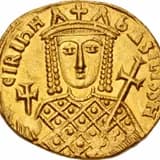
On 15 August 797, Irene has Constantine VI deposed and blinded and becomes sole ruler, styling herself Basileus—the first female Roman emperor.
On 15 August 797, a palace coup in Constantinople resulted in the deposition and blinding of Emperor Constantine VI, orchestrated by his mother, Irene of Athens. In the aftermath, Irene assumed full control of the empire and adopted the title Basileus ton Rhomaion (Emperor of the Romans), not the feminine Basílissa.
This date marks Irene’s emergence as the first woman in history to rule the Roman/Byzantine Empire as sole sovereign, styling herself as emperor rather than empress. Her rule from 797 to 802 made her, in effect, the first female Roman emperor, a radical break with patriarchal norms that had previously restricted women to consort or regent roles.
Politically, the usurpation shocked contemporaries in East and West, raising questions about female authority and succession. Irene’s claim to be the legitimate emperor contributed indirectly to the decision of Pope Leo III to crown Charlemagne as emperor in 800, asserting a Western alternative to the female‑ruled Byzantine throne.
From a women’s‑history perspective, 15 August 797 is a pivotal barrier‑breaking moment: an Athenian noblewoman, through ruthless and controversial means, seized and exercised imperial power in her own name. Her reign showed that, however briefly, Byzantium could accept a woman as autokrator, reshaping debates over gender, sovereignty, and legitimacy in medieval Christendom.