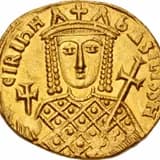
Dies in exile on Lesbos on 9 August 803; later venerated as a saint for restoring icons, marking the end of Byzantium’s first female emperor.
On 9 August 803, Irene of Athens died in exile on the island of Lesbos. After her deposition on 31 October 802, she had been sent away from Constantinople and lived her final months far from the capital she once ruled.
Her death ended the life of a woman who had moved from provincial Athenian nobility to become empress consort, regent, and finally the first woman to rule the Byzantine Empire as sole emperor. By the time she died, Irene’s policies—especially the restoration of the veneration of icons through the Second Council of Nicaea—had already begun to shape the religious identity of Eastern Orthodoxy.
In the Eastern Orthodox Church, Irene came to be venerated as a saint, with her feast day observed on 9 August, the traditional date of her death. Her zeal for icons and patronage of monastic communities contributed to this posthumous spiritual reputation, despite the moral controversy surrounding her orchestration of her son’s blinding and deposition.
From a women’s‑history perspective, 9 August 803 marks the end of a singular female reign but not the end of its influence. Irene’s combination of ruthless realpolitik and religious activism left a complex legacy: she opened a brief window in which a woman could be "Emperor of the Romans" and cemented doctrinal support for icons that continues to define Orthodox Christian practice today.