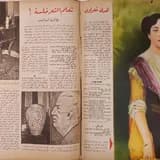
Born as Nūr al‑Huda Muhammad Sulṭān Sha‘rāwī in Minya, Egypt, into an upper‑class family shaped by the harem system and political prominence.
On 23 June 1879, Huda Sha’arawi (born Nūr al-Huda Muhammad Sulṭān Sha‘rāwī) entered the world in the Upper Egyptian city of Minya, on her family’s expansive estate. Born into a wealthy, landed household, she was immediately situated within Egypt’s Ottoman‑era elite.
Her father, Sultan Pasha Sha‘arawi, was a prominent landowner who later became president of Egypt’s Chamber of Deputies, while her mother, Iqbal Hanim, was of Turco‑Circassian origin.[1][2][4] This mixed background exposed Huda to Arabic, Turkish, and European cultural influences from an early age.
Despite the privileges of class, Sha’arawi’s childhood was constrained by the harem system that segregated elite women from public life.[1][3] She was raised largely indoors, under strict gender norms that limited girls’ mobility, education, and autonomy. Yet she also received private tutoring and learned multiple languages, giving her tools that most Egyptian girls lacked.[1][13]
This birth in 1879, in a household that combined political power with patriarchal confinement, shaped the contradictions that would define her activism. The girl born into a harem in Minya would become the woman who publicly removed her veil in Cairo and founded the Egyptian Feminist Union, transforming her personal struggle against seclusion into a national and regional movement for women’s rights.[1][2]