← All women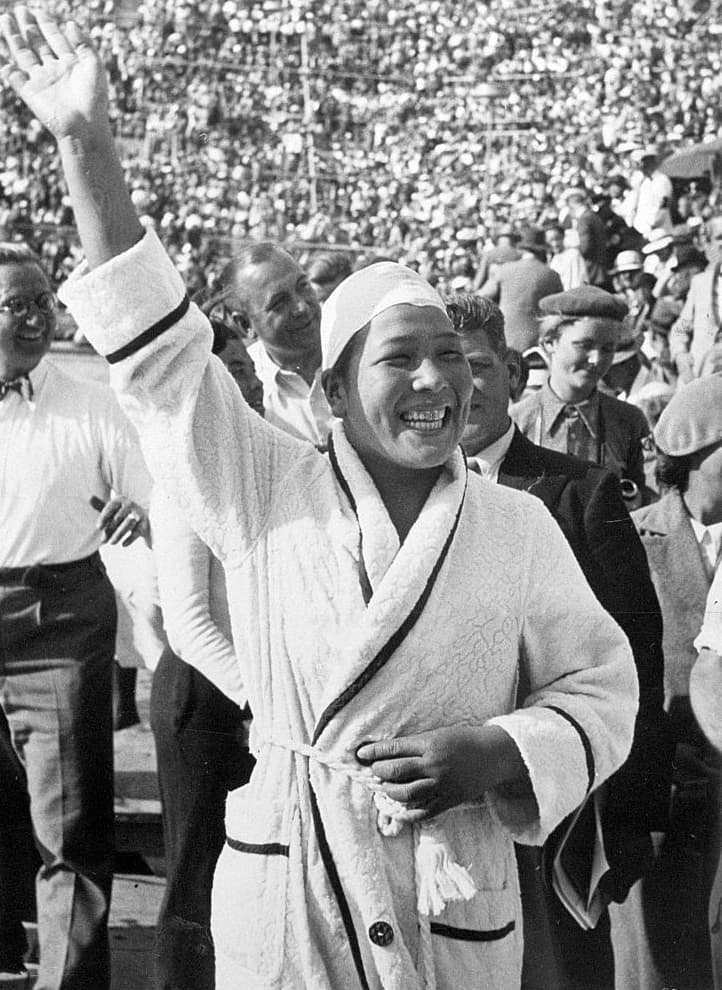
Japanese · Sports
Hideko Maehata
May 20, 1914 – February 24, 1995
Early Life and Background
Hideko Maehata was born on May 20, 1914, in Hashimoto, Wakayama Prefecture, Japan. From a young age, she demonstrated a passion for swimming, which was encouraged by her parents. Growing up, Maehata trained rigorously at local swimming pools, showing great promise in her technique and speed. Her commitment to the sport became a defining feature of her youth, setting the stage for her remarkable career.
Career Beginnings and Development
Maehata began her competitive swimming journey in her teens, quickly gaining attention for her adept breaststroke. Her talent was recognized nationally, and she made her Olympic debut at the 1932 Los Angeles Games, where she won a silver medal in the 200-meter breaststroke. Despite narrowly missing the gold, her performance was hailed as a triumph, garnering significant attention back home in Japan.
Major Accomplishments
Maehata's most significant achievement came at the 1936 Berlin Olympics, where she won the gold medal in the 200-meter breaststroke. Her victory was not only a personal triumph but also a landmark achievement for Japan, marking the first time a Japanese woman won an Olympic gold medal. Her performance symbolized hope and progress for women in Japan, challenging societal norms that were restrictive towards female athletes. Her determination and success at the Games solidified her status as a national hero.
Awards, Honors, and Recognition
Maehata's achievements did not go unnoticed. She was celebrated upon her return to Japan, receiving accolades and recognition from both sporting institutions and the Japanese government. Her influence extended beyond the pool, as she used her platform to advocate for women's participation in sports throughout Japan.
Personal Life
Maehata led a balanced personal life, marrying and raising a family after her retirement from competitive swimming. While her public persona was dominated by her sports career, she cherished her roles as a wife and mother, which she maintained with the same dedication she applied to swimming.
Legacy and Historical Impact
Hideko Maehata's legacy is one of breaking barriers and inspiring future generations. Her Olympic triumph was pivotal in encouraging female participation in sports in Japan. It helped shift perceptions of women's capabilities and roles within both athletic contexts and more broadly within Japanese society.
Later Life and Death
After retirement, Maehata remained involved in the sports community, often attending events and engaging with young athletes. She passed away on February 24, 1995, leaving behind a legacy of empowerment and a trailblazing pathway for women in sports. Her life and achievements continue to inspire, illustrating the impact of determination and courage.
Dated achievements
3 indexed.
- May201914Sports
Birth of Hideko Maehata
Hideko Maehata was born on May 20, 1914, in Hashimoto, Wakayama Prefecture, Japan.
View details Wikipedia: Hideko Maehata - Aug111936Sports
First Japanese Woman to Win Olympic Gold
On August 11, 1936, Hideko Maehata won the Olympic gold in 200m breaststroke at the Berlin Games.
View details