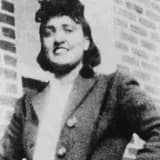
Henrietta Lacks died of uremic poisoning from terminal cervical cancer at Johns Hopkins Hospital on October 4, 1951, aged 31.
Henrietta Lacks died on October 4, 1951, at Johns Hopkins Hospital in Baltimore, succumbing to uremic poisoning caused by her advanced, metastatic cervical cancer. She was only 31 years old, leaving behind her husband David and five young children.
Her death came after months of suffering, during which her cancer had spread aggressively throughout her body despite radiation treatments. At the time of her passing, neither Henrietta nor her family had any knowledge that cells taken from her tumor eight months earlier were being cultured, studied, and were already being shared with researchers—cells that would soon become known worldwide as HeLa.
Her death, tragically premature even by the medical standards of the 1950s, would go largely unnoticed publicly for decades even as her cells transformed biomedical science. It was not until journalist Rebecca Skloot's investigative work culminating in the 2010 book The Immortal Life of Henrietta Lacks that Henrietta's own story—her life, her family, and the circumstances of her death—became widely known, restoring her humanity to a narrative that for decades had focused solely on her cells.