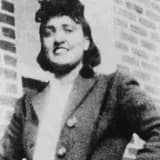
By February 9, 1951, Dr. George Gey's lab had successfully cultured cells from Lacks' tumor—the origin of the HeLa cell line.
By February 9, 1951, researchers in Dr. George Otto Gey's laboratory at Johns Hopkins had confirmed that cells from Henrietta Lacks' cervical tumor biopsy were dividing and multiplying in culture at an extraordinary and unprecedented rate. Unlike virtually every other human cell sample previously attempted, these cells did not die after a few divisions—they kept reproducing indefinitely.
This moment marked the true origin of the HeLa cell line, named using the first two letters of Henrietta's first and last names. It represented the first time human cells had been successfully immortalized in laboratory culture, solving a problem that had stymied cell biologists for decades.
The significance of this achievement cannot be overstated: HeLa cells would go on to become the most widely used human cell line in scientific history, enabling breakthroughs in virology, cancer research, genetics, and pharmacology. Yet Henrietta herself remained unaware that her cells had been taken or that they were being used, a fact her family would not learn for over twenty years.