← All women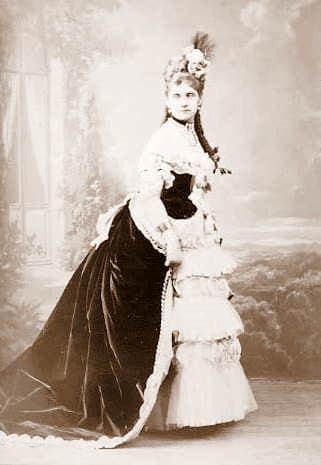
Swiss, American · Sports
Helene de Pourtales
April 28, 1868 – November 2, 1945
Early life and background
Hélène de Pourtalès, born Helen Barbey on 28 April 1868 in New York City, came from a wealthy transatlantic family whose resources and status enabled a life that moved easily between the United States and Europe.[3][2][8] She was the daughter of Isaac Barbey and Mary Barbey
Although detailed records of her childhood and formal education are scarce in standard biographical sources, it is clear that her upbringing was embedded in upper‑class society. The Barbey family belonged to a wider network of Franco‑Swiss and American elites whose fortunes and marriages often linked New York, Paris, and Geneva.[2][19] This environment exposed her to cosmopolitan social circles and the European aristocracy, settings in which sailing was a fashionable pastime and an increasingly organized sport. At some point in her adulthood, Helen Barbey became closely associated with Switzerland through marriage into the aristocratic de Pourtalès family, a prominent Swiss lineage. International references consistently describe her as an "American‑born Swiss" sailor, underscoring both her origins in the United States and her later Swiss national identity.[3][10][11] This dual background would later shape her sporting career, as she competed for Switzerland in the 1900 Summer Olympics while retaining the American birthplace that made her story unusual in the early history of women’s sport. Helen Barbey married Hermann de Pourtalès, a Swiss count and accomplished yachtsman.[3][5] Through this marriage she became Comtesse Hélène de Pourtalès and entered a world in which sailing was not only a leisure activity but also a competitive pursuit. Hermann de Pourtalès was already active in yacht racing, and their social circle included other members of the de Pourtalès family, such as their nephew Bernard de Pourtalès, who would later join them in competition.[3][5][8] The couple’s participation in regattas reflects the culture of aristocratic sport at the turn of the 20th century. Sailing required access to boats, crews, and coastal or riverine venues—resources that were typically available only to the wealthy. As a countess and member of this milieu, Hélène could take part in mixed‑gender crews at a time when women were otherwise seldom invited into formal competition.[2][14] Sources indicate that she was an active crew member rather than a symbolic presence, especially in the small‑tonnage classes in which weight, coordination, and skill mattered for performance.[3][5][8] Though detailed records of her pre‑Olympic races are limited in general reference works, Hélène de Pourtalès was described as a "regatista suizo‑estadounidense" and as a "skippeuse" with dual American and Swiss nationality, implying that she was recognized within European sailing circles for her competence aboard yachts.[1][7] Her transition from high‑society leisure sailor to Olympic competitor thus followed the broader trend of modern sport, in which aristocratic pastimes began to be codified into international contests under emerging organizations like the International Olympic Committee. The 1900 Summer Olympics, held in Paris as part of the Exposition Universelle, were only the second modern Olympic Games and lacked many of the standardized features familiar today. Events were loosely organized, and some competitions were not clearly distinguished from exposition sports or local contests.[3][8] Against this fluid backdrop, Hélène de Pourtalès’s participation in sailing became historically significant. Women were largely excluded from the inaugural 1896 Games in Athens, where the organizers barred them from competing in most disciplines. By 1900, resistance had softened somewhat, and approximately 22 women were allowed to compete among about 975 men, making up only a small fraction of the total athletes.[14][15] These pioneering women participated in sports such as tennis, golf, croquet, equestrianism, and sailing, but their presence was often contested and their events not always recorded with the same formality as men’s competitions. Within this context, Hélène de Pourtalès entered the Olympic sailing regattas as one of the very first women Olympians. References such as Olympedia, national‑language Wikipedias, and modern Olympic storytelling platforms agree that her participation and victory in the 1–2 ton class made her the first woman to compete at the Olympics and the first female Olympic medalist.[8][4][1][18] She sailed aboard the Swiss yacht Lérina with her husband Hermann and their nephew Bernard, representing Switzerland in races staged at Meulan‑en‑Yvelines on the Seine.[3][8][7] On 22 May 1900, the first race of the 1–2 ton yacht class took place on the Seine at Meulan‑en‑Yvelines. The Swiss boat Lérina, crewed by Hermann, Hélène, and Bernard de Pourtalès, competed against other small yachts in challenging river conditions.[8][14][18] According to Olympedia and multiple national‑language sources, Lérina won this first regatta and was awarded the gold medal, thereby securing Switzerland’s victory in the event.[8][3][5] Hélène de Pourtalès’s presence in the crew and the official recognition of the race as an Olympic event make this result momentous. With the gold medal on 22 May, she became the first woman to win an Olympic gold medal, the first female Olympic champion, and, in many historical readings, the first woman to win any Olympic medal, because her medal predated those earned by other women at the same Games.[3][8][1][2] Spanish and Catalan sources explicitly state that, "según el Comité Olímpico Internacional y diversos historiadores", she is considered "la primera mujer que participó en los Juegos y la primera campeona olímpica de la historia"—the first woman to participate in the Games and the first Olympic champion in history.[1][6] German‑language references similarly describe her as "die erste Frau, die an einem olympischen Wettbewerb teilnahm und auch die erste Olympiasiegerin der Neuzeit"—the first woman to take part in an Olympic competition and the first Olympic champion of the modern era.[4] The race itself, in a small‑tonnage class where crew coordination and boat handling are critical, required skill and physical effort. Descriptions from later Olympic media note that Lérina overcame difficult wind and current conditions to finish with a winning time, and that Hélène earned the nickname "the fastest yachting lady" from contemporary observers.[18] Her contribution undermines any notion that she was a mere passenger; instead, she was an active competitor whose success challenged prevailing gender assumptions. Only three days later, on 25 May 1900, Lérina and its crew returned to the water for the second race in the 1–2 ton class at Meulan. Olympedia records that the same crew—Hermann, Hélène, and Bernard de Pourtalès—competed again and finished in second place, earning an Olympic silver medal.[8][5] This second
medal made Hélène de Pourtalès the first woman in history to win multiple Olympic medals.[8][14] Topend Sports and narrative features on her life highlight that she took both gold and silver in the 1–2 ton class, emphasizing that her achievement included not just a single breakthrough but sustained success within the Olympic regattas.[5][14] Her dual medals came at the very beginning of women’s Olympic participation, demonstrating that women could be consistent podium finishers as well as symbolic pioneers. Media and historical analyses sometimes note confusion in secondary sources about whether her first medal was gold or silver, and whether she was "first" in a mixed regatta or specifically within the 1–2 ton class. However, detailed sports historians, Olympedia, and Guinness‑style record compilations agree that she won gold on 22 May 1900 in the first 1–2 ton race and silver on 25 May in the second race of the same class.[8][5][1][14] These clarifications have been important for restoring her precise place in Olympic chronology. Beyond the medals themselves, her performances in both races cemented her role in a mixed‑gender team that showed women could share fully in the demands and rewards of high‑level sport. Pourtalès’s dual‑medal record predates the more widely celebrated careers of later female Olympians and serves as an early example of women accumulating multi‑event success within a single Games. Some sources note that Hélène de Pourtalès also sailed in an open class event at Paris 1900, in which the boat did not finish the race and therefore did not earn a medal.[13] Womenworldculture, for example, states that she "also participated in the open class but did not finish," illustrating that her Olympic involvement extended beyond the two medal‑winning regattas.[13] However, detailed competition records for these open events are sparse and were long treated ambiguously by historians, reflecting the broader difficulties in reconstructing the exact status of certain 1900 competitions. Olympedia and mainstream encyclopedic sources focus primarily on the 1–2 ton class results as her official Olympic record, listing the gold and silver medals while acknowledging the complexity of the program.[3][8] These gaps in documentation point to a larger issue in early Olympic history: women’s events and mixed competitions were often poorly recorded, and the significance of women’s participation was not always recognized at the time. As a result, much of Hélène de Pourtalès’s sailing career outside the Olympics—whether in local regattas or private competitions—remains under‑documented in modern reference works. During her lifetime, Hélène de Pourtalès’s Olympic achievements do not appear to have been commemorated with the kind of high‑profile honors that later generations of athletes received. The early Olympic Games were more modest in scale, and the role of women was often downplayed. Nevertheless, the medals themselves, and her status as a countess in Swiss society, would have given her a form of social recognition, particularly within yachting circles.[3][4] In the decades following her death, historians and organizations gradually reconstructed her place in Olympic history. National‑language Wikipedias, sailing histories, and specialized databases like Olympedia now consistently identify her as the first woman to win an Olympic gold medal and the first female Olympic champion.[3][8][1][4][6] Articles in sport and lifestyle media—such as Sail Magazine’s "Women’s History Spotlight"—describe her as "the first woman to win an Olympic medal," emphasizing the pioneering nature of her achievements.[2] Guinness World Records includes her in its record lists as the first female Olympic champion, underscoring the global recognition of her status.[1] Contemporary Olympic storytelling, including videos and podcasts produced around recent Games, has further popularized her story. For example, Olympic‑themed videos on platforms like YouTube retell her 1900 victory and highlight that she won her medal "several days before Charlotte Cooper," making her "technically the first female Olympic medalist in history."[12][18] These modern acknowledgments, though posthumous, function as a form of honor, retroactively restoring her to the narrative from which she had long been omitted or overshadowed. Beyond her Olympic participation, relatively few details of Hélène de Pourtalès’s personal life appear in standard reference sources. The biographical record focuses on her birth, marriage into the de Pourtalès family, and death, with limited information on her children, day‑to‑day activities, or involvement in other social causes.[3][2][8] It is clear, however, that she lived much of her adult life in Switzerland and moved within aristocratic and high‑society circles. Her husband Hermann, also a count, was a noted sailor, and their shared interest in yachting formed a central part of their social and sporting identity.[3][5] Their nephew Bernard, who sailed with them in Paris 1900, indicates that the de Pourtalès family treated sailing as an intergenerational pursuit, with relatives joining crews and regattas.[3][5][8] There is no widely documented evidence in mainstream sources that she held formal professional roles outside of sailing or that she engaged in public activism beyond her presence as a woman in sport. In this sense, her legacy is tied primarily to what she represented: a woman who, by simply taking her place on the starting line and sailing to victory, challenged the boundaries of women’s participation in international competition. Hélène de Pourtalès’s legacy lies in her status as a pioneer of women’s Olympic participation. As the first woman to compete in an Olympic event and the first to become an Olympic champion, she occupies a foundational place in the history of women in sport.[1][8][4] Her dual medals in the 1–2 ton class in 1900 demonstrate that women could not only appear in competitions but also win them decisively. Her story also illustrates the intersection of class, gender, and nationality in early sport. She was able to compete because she belonged to a social stratum with access to boats, training, and international travel. At the same time, her achievements opened doors symbolically for women of other backgrounds, contributing to the gradual normalization of women’s presence in competitive arenas.[14][15] Modern historians and writers increasingly emphasize that she has been a "forgotten" or "overlooked" figure, overshadowed by later female Olympians who competed in more publicized sports such as tennis and athletics.[12][18] The rediscovery of her role reflects broader efforts in women’s history to recover pioneers whose contributions were minimized or lost in traditional narratives. Her impact can be seen in several dimensions: Her life underscores how a single competition—two races over a few days—can have enduring symbolic consequences. Although she did not become a public advocate or celebrity, the record of her performance has become a touchstone for discussions of gender equality and representation in the Olympics. After the 1900 Paris Games, public records concerning Hélène de Pourtalès’s later life are sparse. She appears to have continued living in Switzerland, with her social identity anchored in the de Pourtalès family and the Swiss aristocracy. Her sailing career beyond the Olympics is not extensively documented in mainstream sources, suggesting that she may have returned to private regattas or leisure sailing rather than pursuing a long international racing career.[3][8] She died on 2 November 1945 in Geneva, Switzerland, at the age of 77.[3][6][8][9][10] Olympedia calculates her age at death as "77 years 6 months 4 days," and multiple language editions of Wikipedia corroborate the same date and place.[8][3][4][6][9][10][11] Her death came shortly after the end of World War II, at a time when the Olympic movement itself was on pause; the Games would not resume until London 1948. In that sense, her life spanned the formative half‑century of the modern Olympics, from their revival in 1896 through their interruption during global conflict. Only many years after her death did historians fully recognize her achievements. As research on women’s sports history advanced and archival work clarified the status of early events, she emerged in scholarly and popular accounts as the first female Olympic champion and the first woman to win an Olympic gold medal. Contemporary articles, podcasts, and videos now recount her story as part of efforts to highlight "sheroes" of the past and to correct the historical record.[14][15][17][18] Hélène de Pourtalès thus occupies an important place in women’s history and sports history: a transatlantic aristocrat whose brief but groundbreaking Olympic career helped make it possible for countless women to follow her onto the world’s greatest sporting stage.Marriage, social position, and introduction to sailing
Paris 1900 and the birth of women’s Olympic participation
First Olympic gold: the 1–2 ton class, race one
First woman with multiple Olympic medals: race two
Other Olympic participation and limitations of the record
Awards, honors, and later recognition
Personal life
Legacy and historical impact
Later life and death
Dated achievements
4 indexed.
- Apr281868Science
Birth of Helen Barbey in New York City
Helen Barbey, later Hélène, Comtesse de Pourtalès, was born in New York City, the American-born woman who would become a Swiss Olympic sailor.
View details Hélène de Pourtalès - Wikipedia - May221900Science
First female Olympic champion — gold in 1–2 ton sailing at Paris 1900
Crewing the Swiss yacht Lérina, she won Race One of the 1–2 ton class at Meulan-en-Yvelines, becoming the first female Olympic champion and gold medalist in history.