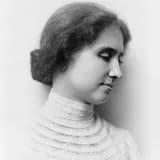
In September 1888, Helen Keller begins studying at the Perkins Institution in Boston.
In September 1888, six‑year‑old Helen Keller and her teacher Anne Sullivan traveled from Alabama to Boston so Helen could begin studies at the Perkins Institution for the Blind.
At Perkins, Keller met other blind and deafblind children for the first time, including Laura Bridgman, whose earlier education had inspired Anne Sullivan’s methods. Immersed in an environment designed for blind students, Helen gained access to Braille books, tactile teaching materials, and structured lessons in reading, writing, and arithmetic. The experience broadened her social world beyond her family and provided a model of community among disabled peers.
This move was historically significant because it linked Keller’s individual educational experiment to an emerging institutional framework for special education. In the late 19th century, Perkins was a leading U.S. school for blind students, part of a small network of institutions that challenged the assumption that visual impairment precluded scholarship or professional achievement. Helen’s presence there, widely publicized, helped draw attention—and philanthropic support—to the education of blind and deafblind children.
For women’s history, the September 1888 enrollment illustrates how a disabled girl could, with extraordinary advocacy and resources, access formal education at a time when many non‑disabled girls were still denied secondary schooling. Keller’s studies at Perkins laid essential groundwork for her later academic trajectory through the Cambridge School and Radcliffe College, reinforcing the idea that girls, including those with severe disabilities, were capable of rigorous intellectual work.