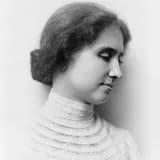
At 19 months, Helen Keller’s February 1882 illness leaves her permanently deaf and blind.
In February 1882, at 19 months old, Helen Keller contracted a sudden and severe illness, described in contemporary accounts as "brain fever" and later identified by historians as likely scarlet fever or meningitis.
The disease left her permanently deaf and blind, abruptly severing her access to sound and sight at an age when language acquisition had only just begun. Her family reported that she emerged from the illness unable to hear, see, or speak; within months she became increasingly frustrated and volatile, living in near total isolation despite being surrounded by loved ones.
In the 1880s, medical care for infectious diseases was rudimentary, and there were no established educational pathways for deafblind children. Many such children were institutionalized or kept at home without formal schooling. Keller’s disability therefore placed her outside the narrow expectations for Southern white girls, who were typically prepared for domestic roles rather than public intellectual life.
This early, life‑altering event is historically significant because it set the stage for the unprecedented educational experiment that would follow with Anne Sullivan, and for Keller’s eventual role as a global symbol of disability rights. Her survival and the profound consequences of the illness highlight both the vulnerabilities of childhood in the pre‑antibiotic era and the structural obstacles confronting disabled children before modern special education.