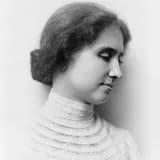
Helen Keller dies at Arcan Ridge in Easton, Connecticut, on June 1, 1968.
On June 1, 1968, Helen Keller died at Arcan Ridge, her home in Easton, Connecticut, a few weeks shy of her 88th birthday.
By the time of her death, Keller had spent more than seven decades in public life as an author, lecturer, and advocate for people who are blind and deaf, as well as a prominent voice in movements for women’s suffrage, labor rights, pacifism, and racial equality. She had written over a dozen books and hundreds of essays, worked for the American Foundation for the Blind for more than 40 years, and traveled to over three dozen countries as a goodwill ambassador.
Her passing marked the end of an era in disability history. Keller’s life had spanned Reconstruction, the Progressive Era, two World Wars, the Great Depression, and the rise of the modern civil‑rights and disability‑rights movements. During those decades she helped shift public attitudes from viewing blind and deaf people as objects of pity to recognizing them as citizens entitled to education, employment, and political participation.
In obituaries and memorials, newspapers and organizations worldwide emphasized not only her extraordinary personal achievements but also the systems she helped build—schools, rehabilitation programs, advocacy organizations—that continued to serve disabled people after her death. June 1, 1968 is therefore remembered not simply as the date of her passing, but as a historical marker for the conclusion of a transformative life whose influence persisted in policy reforms, cultural narratives, and the global work of institutions bearing her name.