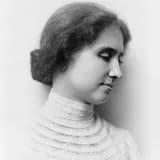
Helen Keller graduates cum laude from Radcliffe on June 1, 1904, the first deafblind person to earn a college degree.
On June 1, 1904, Helen Keller received her Bachelor of Arts degree cum laude from Radcliffe College, becoming the first deafblind person in the world to earn a college degree.
Her path to graduation was arduous. Keller had entered Radcliffe in 1900 after preparatory study at the Cambridge School for Young Ladies. Throughout her coursework in literature, philosophy, and history, she relied on Anne Sullivan to spell lectures and discussions into her hand, and on a team of tutors who transcribed texts into Braille or read them aloud for tactile interpretation. Radcliffe itself offered no formal accommodations; Keller and Sullivan had to negotiate access to materials and classroom participation case by case.
This achievement was groundbreaking on multiple fronts. In an era when few women—disabled or not—attended college, Keller’s success dramatically expanded public conceptions of who could pursue higher education. It challenged medical authorities who doubted the intellectual capacity of people who were both blind and deaf, and it exposed structural barriers within universities that assumed students would be able to see and hear.
June 1, 1904 quickly became a touchstone date cited by disability organizations, including the American Foundation for the Blind and Perkins School for the Blind, as evidence that deafblind students could thrive academically if given appropriate support. Keller’s graduation also amplified her international profile: as a deafblind college‑educated woman, she commanded respect as a writer and lecturer, strengthening the influence of her later activism for disability rights, women’s suffrage, labor reform, and pacifism.