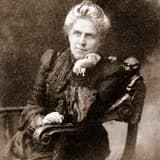
Strong's best-known patent, for dam and reservoir construction, was granted, becoming foundational to dry-land irrigation and flood-control engineering.
On December 6, 1887, Harriet Williams Russell Strong was granted a U.S. patent for an innovative method of dam and reservoir construction. This is widely regarded as her most significant and influential invention, and it remains the centerpiece of her historical legacy as a pioneer in water conservation and dry-land agriculture.
Strong developed her dam design out of necessity: after her husband's death left her managing a struggling ranch in the arid Southern California landscape, she needed reliable methods to capture and store scarce water for irrigation. Her patented design allowed for the construction of multiple dams in sequence along a watercourse, enabling more efficient storage and control of water than single-dam systems, while also mitigating flood damage — a critical concern in Southern California's flash-flood-prone canyons.
This patent later became foundational to broader discussions of irrigation and water-storage engineering, including proposals related to the Colorado River and large-scale water projects that would shape the American Southwest well into the twentieth century. Strong's ideas anticipated concepts later employed in major dam-building projects, and she is frequently credited as an influential, if under-recognized, figure in the history of American water engineering.
As a woman working in a field almost entirely dominated by male engineers, Strong's success in securing and later publicizing this patent challenged prevailing assumptions about women's capacity for technical and scientific innovation, cementing her reputation as one of the most important female inventors of the Gilded Age.