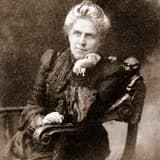
Strong was granted a U.S. patent for a device to raise and lower hard-to-reach windows, one of her earliest documented inventions.
On October 7, 1884, Harriet Williams Russell Strong was granted a United States patent for a mechanical device designed to raise and lower windows that were difficult to reach, such as those set high in a wall or above furniture. This household invention reflects the practical, problem-solving mindset that would characterize her entire inventive career.
At the time, patenting was an overwhelmingly male-dominated pursuit, and women inventors faced significant social and legal barriers, including limited access to capital, technical training, and the patent system itself. Strong's success in securing this patent, along with several others in the same period, positioned her among a small cohort of nineteenth-century American women who successfully navigated the U.S. Patent Office.
This early patent is historically significant not for its commercial impact, but as evidence that Strong's inventive career began years before her celebrated work in dam construction and water conservation. It demonstrates a consistent pattern of identifying everyday problems — from household mechanisms to large-scale irrigation engineering — and devising practical solutions. The window-raising device also foreshadowed her later, far more consequential achievements in hydraulic engineering, illustrating an inventive trajectory that moved from domestic convenience to large-scale infrastructure innovation that would shape agriculture across the American West.