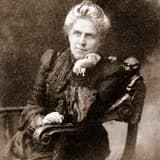
Strong received a U.S. patent for a hook-and-eye fastening device, one of five documented patents in her name.
On November 4, 1884, Harriet Williams Russell Strong was granted a U.S. patent for a hook-and-eye device, a small but useful mechanical fastening invention. This patent, granted just weeks after her window-raising device patent, underscores the productivity and inventive momentum Strong maintained during the mid-1880s.
While seemingly modest compared to her later engineering achievements, this patent is part of a documented body of five U.S. patents attributed to Strong, as cataloged by institutions such as the Whittier Museum. Together, these patents illustrate the breadth of her inventive interests, spanning household hardware to large-scale water infrastructure.
The hook-and-eye patent is historically meaningful because it reflects the reality that many women inventors of the era often began with small household inventions before moving into more complex, capital-intensive fields like agriculture and civil engineering. Strong's ability to secure multiple patents in rapid succession during this period speaks to her technical aptitude and her determination to establish herself as a serious inventor at a time when female patent-holders were rare. This foundation of practical invention would later support her credibility when she pursued far more ambitious water-storage and flood-control patents that reshaped irrigation practices in California.