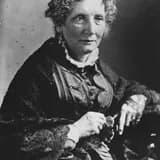
Stowe met President Abraham Lincoln at the White House, underscoring the political force of Uncle Tom’s Cabin.
On August 11, 1853, Harriet Beecher Stowe met President Abraham Lincoln at the White House. The encounter has become famous for the reported greeting attributed to Lincoln, who was said to have called her “the little woman who wrote the book that made this great war.” Even when the exact wording is debated, the meeting itself symbolized the extraordinary political reach of Stowe’s novel.
The significance of the meeting lies in what it represented: a novelist, and a woman, was recognized by the nation’s chief executive as someone whose writing had altered the political climate of the United States. Uncle Tom’s Cabin had become more than a bestseller; it was part of the moral vocabulary of sectional conflict. The White House meeting also reflected the unusual status Stowe had achieved in an era when women were generally excluded from formal political power.
Her presence at the center of national politics demonstrated the potential of literature to influence public life. It also offered a rare public acknowledgment that a woman’s authorship could help shape historical events on the eve of the Civil War, reinforcing Stowe’s enduring place in American memory.